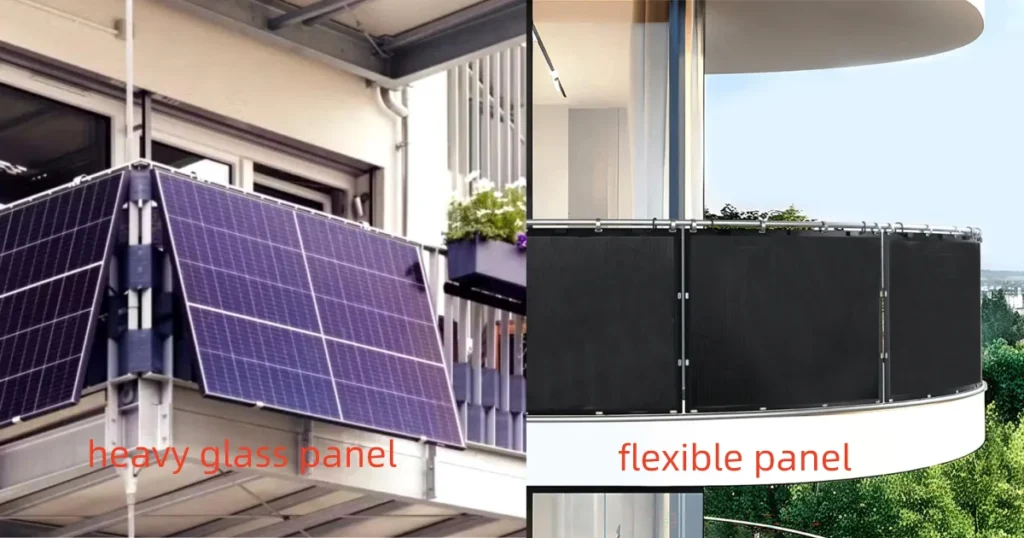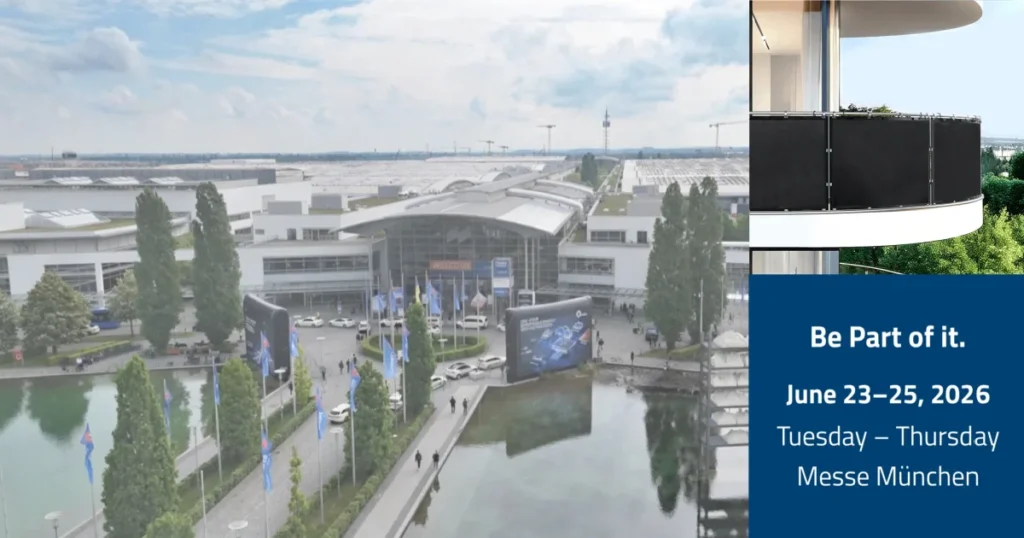
Intersolar Europe 2026 once again demonstrated how rapidly the European solar market is evolving.
Over three days at Messe München, conversations with distributors, installers, brand owners, RV equipment suppliers, marine solution providers, and renewable energy professionals revealed several clear trends shaping future demand for flexible and portable solar solutions.
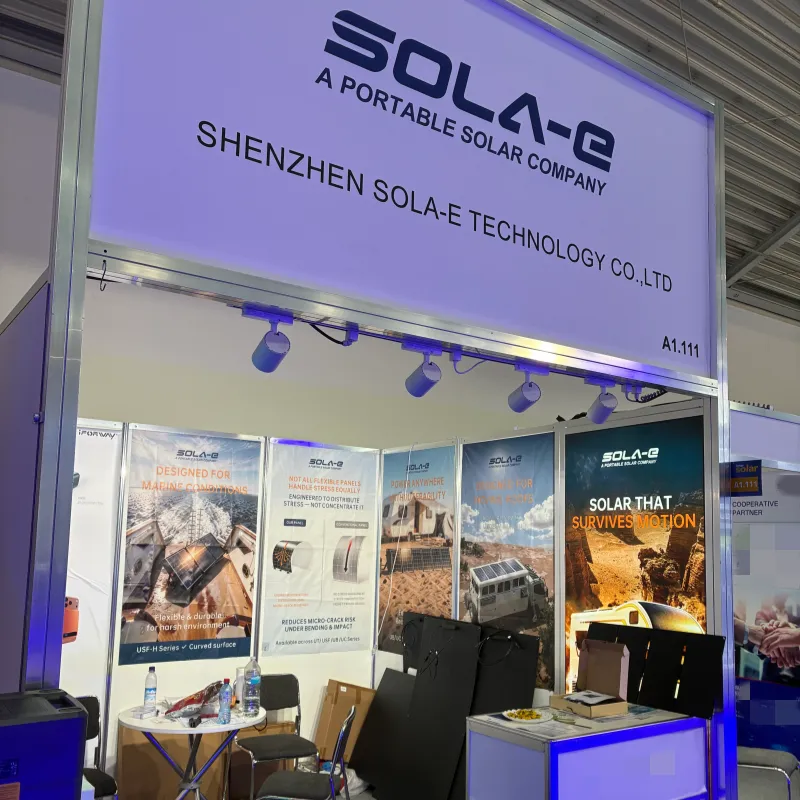
At Booth A1.111, the Sola-E team had the opportunity to discuss a wide range of applications, technologies, and manufacturing requirements with visitors from Germany, France, the Netherlands, Spain, Poland, Italy, and beyond.
While every project had unique requirements, five recurring themes emerged throughout the exhibition.
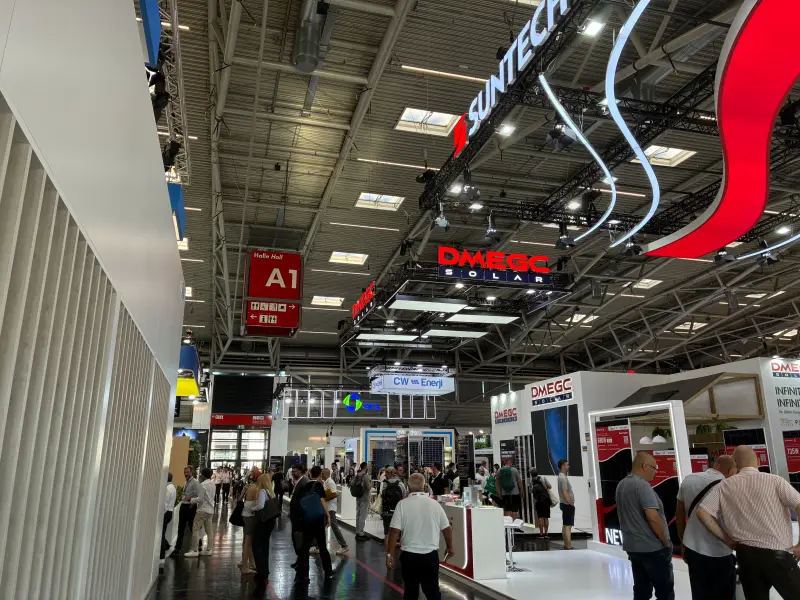
Trend 1: Lightweight Solar Solutions Are Becoming a Purchasing Priority
One of the strongest signals from this year’s exhibition was the growing demand for lightweight solar products.
Buyers across multiple industries are increasingly looking for solar solutions that are easier to transport, install, and integrate into mobile or space-constrained applications. This trend was evident in conversations related to RV systems, marine equipment, portable power stations, balcony installations, and off-grid energy projects.
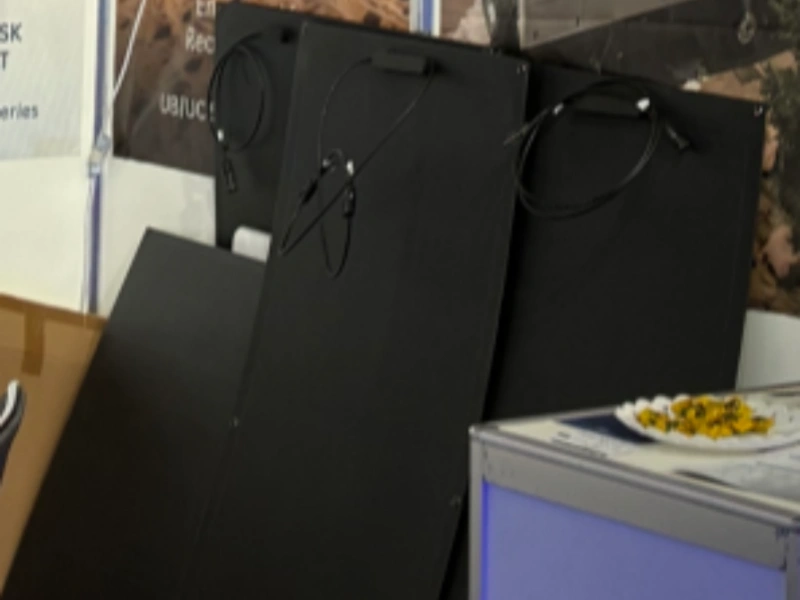
In many cases, reducing weight was viewed as equally important as increasing power output. As a result, flexible solar panels continue to gain traction in applications where traditional glass modules are impractical.
The shift toward lightweight solar solutions reflects a broader market preference for products that simplify installation while maintaining durability and long-term performance.
Trend 2: Balcony Solar Continues to Expand Across Europe
Another highly visible trend was the continued growth of balcony solar systems throughout Europe.
Driven by rising electricity costs, energy independence initiatives, and favorable regulatory developments, plug-and-play balcony solar systems have become increasingly popular, particularly in Germany and neighboring markets.
Visitors frequently discussed lightweight solar modules that could be installed on apartment balconies, urban residential buildings, and small-scale self-consumption projects.
As distributed energy adoption continues to grow, balcony solar appears set to remain one of the most active segments within the European residential solar market.
Trend 3: Marine and RV Markets Continue to Create New Opportunities
Marine and RV applications generated significant interest throughout the exhibition.
Many visitors were searching for solar solutions capable of operating reliably in environments where space, weight, and vibration resistance are critical considerations.
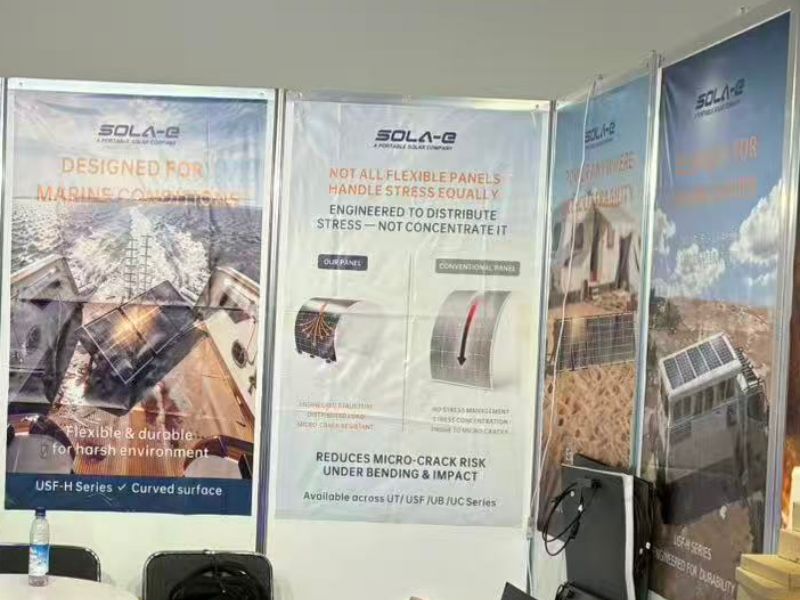
Flexible solar panels are particularly well suited to these applications because they can be installed on curved surfaces, reduce mounting complexity, and provide greater design flexibility than conventional rigid modules.
Conversations with marine equipment suppliers and RV-related businesses suggested continued demand growth in both Western and Eastern European markets.
Trend 4: HPBC Technology Is Gaining Greater Attention
Compared with previous exhibitions, more visitors specifically asked about next-generation solar cell technologies and performance differences between conventional PERC modules and HPBC-based solutions.
Efficiency remains important, but buyers are increasingly evaluating additional factors such as low-light performance, aesthetics, durability, and long-term energy yield.
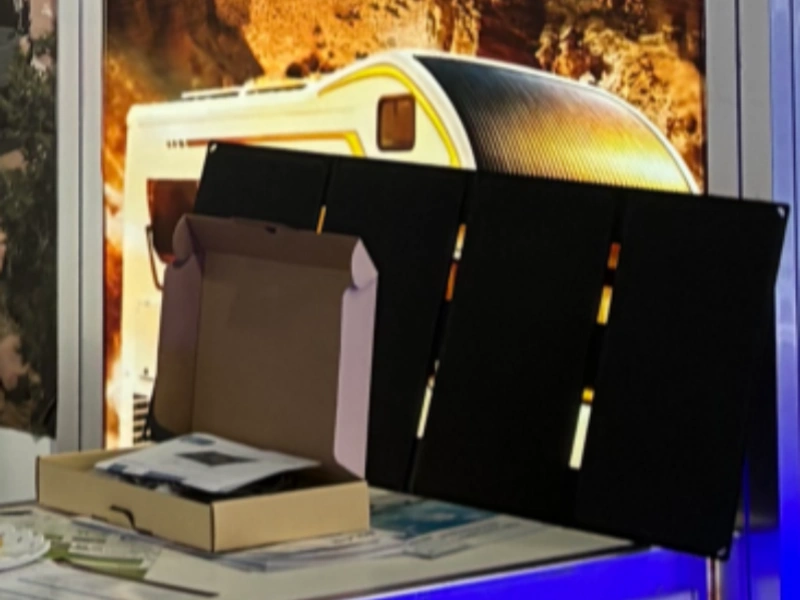
The clean full-black appearance and high conversion efficiency of HPBC solar panels attracted strong interest from distributors and brands looking to position themselves in premium market segments.
These conversations suggest that technological differentiation is becoming increasingly important as competition within the solar industry continues to intensify.
Trend 5: OEM and Private Label Demand Remains Strong
Beyond products themselves, manufacturing capabilities were a major topic of discussion.
Many European brands are actively exploring private-label solar products, customized designs, and long-term manufacturing partnerships. Visitors frequently asked about product customization, branding options, packaging design, certification support, and production scalability.
Compliance with CE, IEC, and other market-specific requirements remains a key consideration for buyers entering or expanding within the European market.
The growing number of OEM and ODM inquiries highlights the continued demand for flexible manufacturing partners capable of supporting both product development and commercialization.
Key Takeaway
While solar applications continue to diversify, conversations throughout Intersolar Europe 2026 consistently pointed toward three purchasing priorities:
• Lightweight product design
• Higher-efficiency solar technologies
• Reliable long-term manufacturing partnerships
Companies that can successfully combine these elements are likely to benefit from the next phase of growth in portable, flexible, and application-specific solar markets.
Looking Back at Intersolar Europe 2026
Over three days at Booth A1.111, the Sola-E team had the privilege of meeting distributors, RV and marine equipment brands, project developers, and renewable energy professionals from across Europe.
The exhibition provided valuable opportunities not only to showcase products, but also to better understand the evolving needs of the market and the direction of future solar applications.
We would like to thank everyone who visited our booth, shared insights, and discussed their projects with us.
Let’s Continue the Conversation
If you visited us at Intersolar Europe 2026 — thank you.
If you were unable to attend this year, we would be happy to connect.
Whether you are exploring flexible solar panels, portable solar solutions, or OEM manufacturing opportunities, our team is ready to discuss your project requirements and help identify the right solution for your market.
→ Explore Flexible Solar Panels
→ Discover OEM Solar Manufacturing Solutions
Sam | Solar Application Specialist
With over 10 years of experience in the photovoltaic manufacturing industry, Sam specializes in risk control and application engineering for portable battery chargers and marine solar panel solutions. He helps OEMs and distributors bridge the gap between technical specs and real-world performance.