
Private label foldable solar panels: a sourcing checklist
What to check before you put your brand on a foldable solar panel. Cells, build, hinges, junction box, outputs, packaging and the documents to ask for.
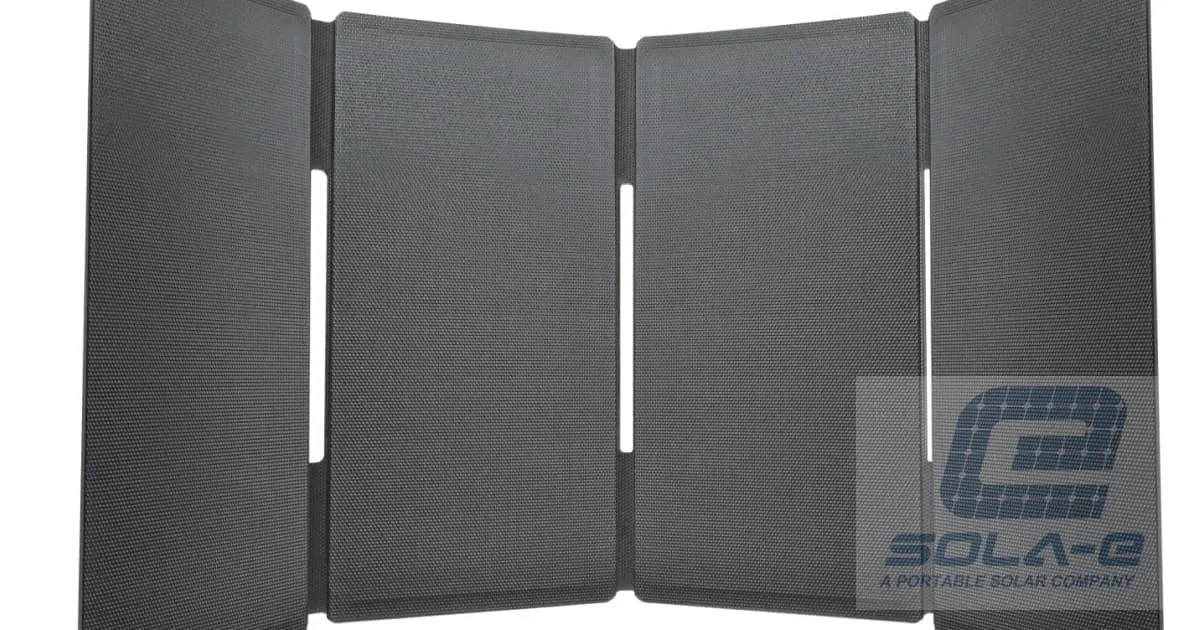
Foldable panels look simple, which is why so many fail in customers’ hands. They are folded and unfolded hundreds of times, dropped, left in the rain and packed into car trunks. Here is what to check before your logo goes on one.
Cells and rated power
- Cell type. HPBC or PERC monocrystalline. HPBC gives more power for the same folded size.
- Rated power. Ask how it was measured, and test samples yourself in real sun. A panel that only reaches its rating under lab conditions will bring complaints.
- EL images. Micro-cracks are invisible without electroluminescence imaging. Ask for EL images of your samples.
Build and water resistance
- IP67 laminated. Cells sealed in one piece of ETFE, no stitched seams. Best for wet and heavy-use markets.
- IP54 fabric. Cells in a stitched fabric and CPC structure. Lower cost, fine for fair-weather camping.
Make sure the IP rating stated on your packaging matches what the product was built for. Our IP67 vs IP54 guide compares the two.
Hinges and stitching
The hinge is where foldable panels fail. Ask how hinges are reinforced and how many fold cycles they were tested to. Ours are tested to 50,000+ folds without power loss. On fabric panels, look at stitch density and seam finishing around the cells.
Junction box and outputs
- Is the junction box sealed, and is the cable strain-relieved?
- Which outputs: USB-A QC3.0, USB-C PD (at what wattage), DC?
- Does the controller protect against reverse current and short circuits?
Connectors and accessories
List every power station your customers use, and ship the right cable in the box: MC4, XT60, Anderson, DC7909 or DC5521.
Branding and packaging
- Logo position and printing method on fabric and handle
- Fabric color options
- Retail box, manual and inserts in your markets’ languages
- Export packing: carton strength, pallet and container loading
Documents to ask for
- Specification sheet with cell type, front film and IP rating
- EL images of samples
- Fold, drop and water test results
- Certifications your markets require
- Written warranty terms and application limits
How we work
Samples in 7–10 days with EL images on request, MOQ 50 pcs per model, mass production 25–35 days after sample approval. See OEM and private label for the full process.