
IP67 vs IP54 foldable solar panels: which build should you sell?
How laminated IP67 and fabric IP54 foldable solar panels differ in construction, water resistance, weight, warranty and the markets they suit.
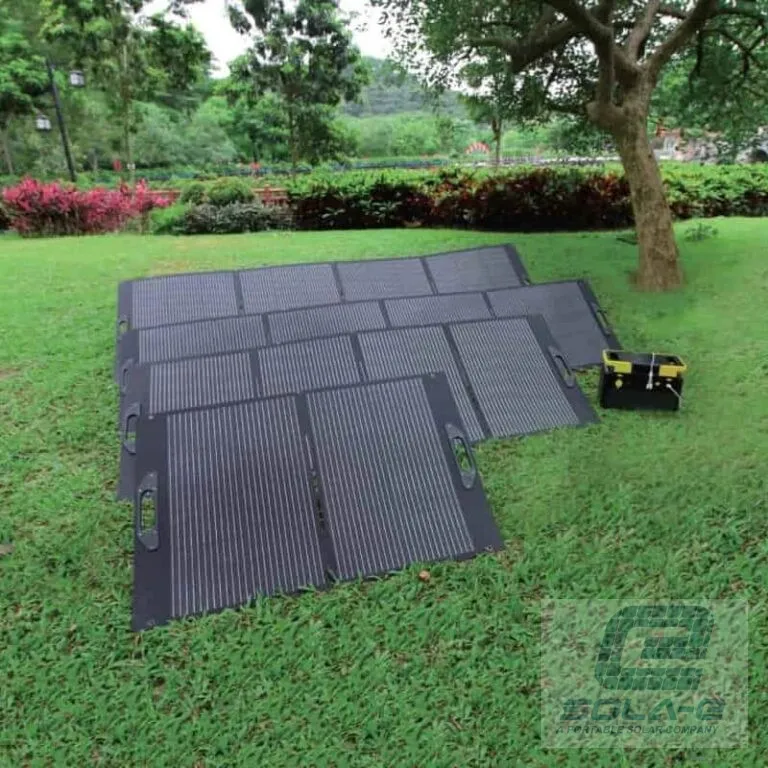
If you are adding foldable solar panels to your range, the first choice is the build: a fully laminated panel rated IP67, or a fabric panel rated IP54. They look similar in a product photo, but they are made differently and suit different customers.
What the ratings mean
The IP code (IEC 60529) has two digits. The first is protection against dust, the second against water.
- IP67: dust-tight, and protected against temporary immersion in water.
- IP54: protected against dust that would affect operation, and against splashing water from any direction.
How the two builds are made
IP67 laminated (our UT series). The cells are laminated in ETFE as one sealed piece. There are no stitched seams, so there is no path for water to reach the cells.
IP54 fabric (our UB and UC series). The cells sit in a fabric and CPC structure, stitched together, with a handle. The fabric protects against knocks and abrasion, and the panel folds like a bag.
Side by side
| IP67 laminated (UT) | IP54 fabric (UB / UC) | |
|---|---|---|
| Construction | One-piece ETFE lamination | Fabric and CPC, stitched |
| Water | Brief immersion | Splashes and rain |
| 200 W weight | 5.3 kg / 11.7 lb (UT200H) | 4.8 kg / 10.6 lb (UC200W) |
| Warranty | 3 years | 1 year |
| Best for | Wet, dusty and heavy-use markets | Price-sensitive camping and retail |
Which one to choose
Choose IP67 if your customers use panels in rain, near water, in dust, or every day, or if you want to offer a longer warranty. Choose IP54 if you sell into general camping and retail, where price matters most and panels are used in fair weather.
Many brands carry both: IP54 as the entry model and IP67 as the premium one. We make both builds in 15–400 W, from 50 pieces per model.