
Brazil truck fleet case: why we talked a customer out of a U-shaped solar panel
A Brazilian logistics fleet asked for a custom U-shaped 200 W panel for its truck cabs. We proposed two rectangular 200 W, 36 V panels per cab instead. What we saw in the design and why.
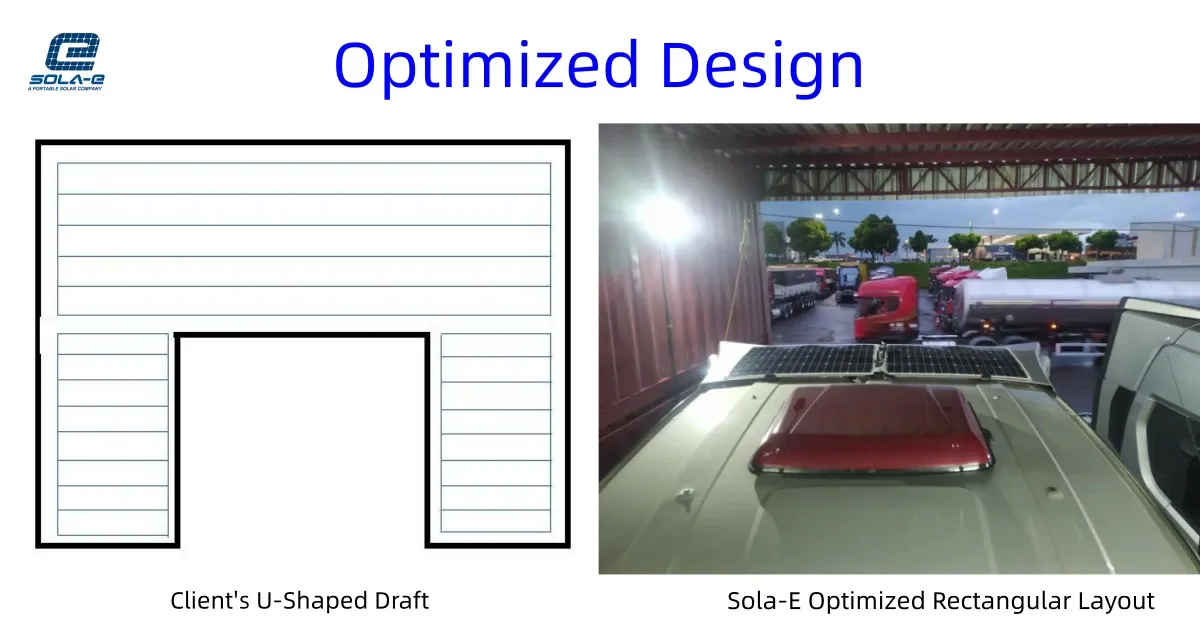
Short version: in 2022 a Brazilian logistics operator asked us to build a U-shaped 200 W solar panel to wrap around a recess in its truck cab roofs. We reviewed the drawing and proposed two standard rectangular 200 W, 36 V panels per cab instead. The customer agreed, and ordered from us almost every year from 2022 to 2025.
The project at a glance
- Customer: a logistics operator in Southeast Brazil running more than 100 heavy trucks
- Use: auxiliary power on the cab for the 24 V battery, telematics and cab pre-cooling
- Original request: one custom U-shaped 200 W panel per cab
- What we built: two rectangular 200 W, 36 V panels per cab
- Supply: orders almost every year, 2022 to 2025
We do not name customers without their permission.
What the customer asked for
The cab roof has a recessed section in the middle. The customer’s drawing wrapped a single U-shaped panel around it to use as much of the roof as possible.
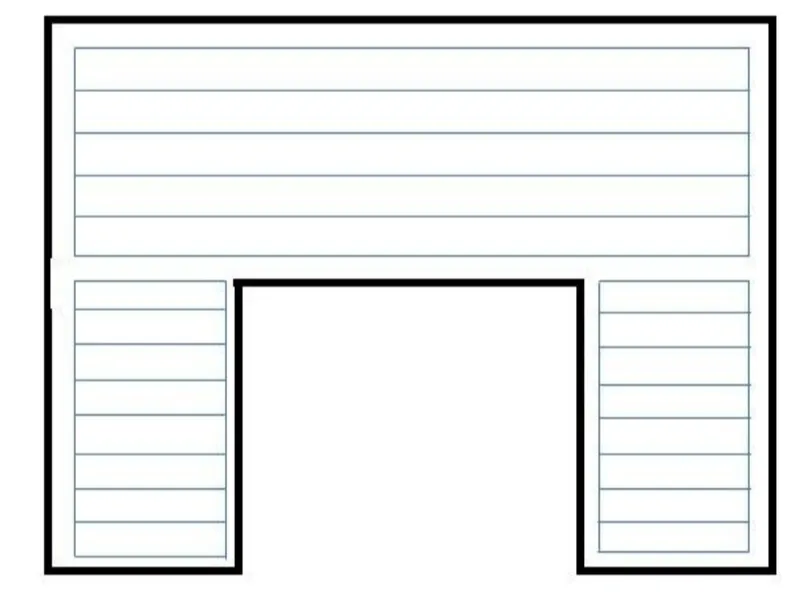
It looked tidy on the drawing. Before quoting tooling we reviewed how it would be made and how it would behave on the road, and two things worried us.
Why we advised against the U shape
1. It costs more to make. An irregular outline needs its own cell layout, its own lamination tooling and more manual work. It also wastes cell and material area. A rectangular panel runs on the standard process.
2. The inner corners are weak points. Long-haul trucks spend long days on uneven highways. A U-shaped laminate concentrates stress at its two inner corners every time the roof flexes and shakes. Cells and interconnects near those corners are where we would expect cracks to start. We explain the mechanism in how road vibration cracks solar panels.
A third point came up later: one large custom panel is harder to replace. If it is damaged, the truck waits for a made-to-order part.
What we proposed
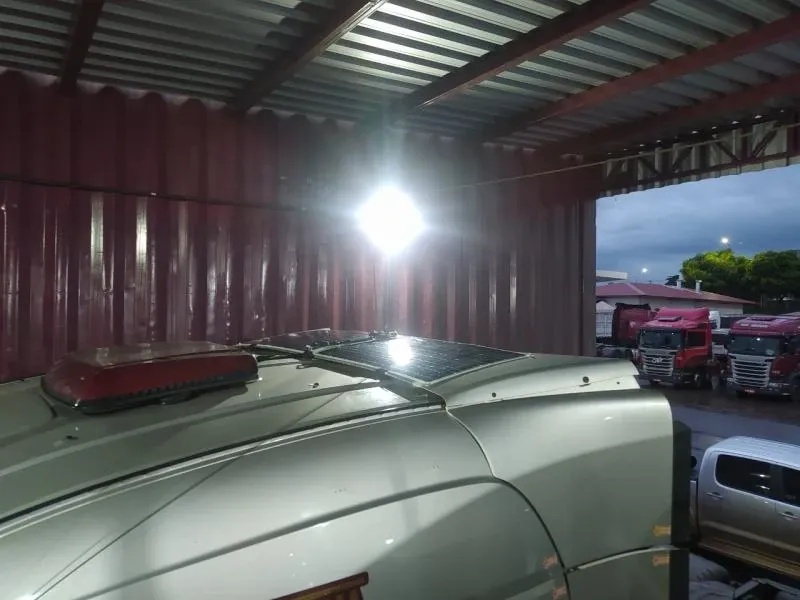
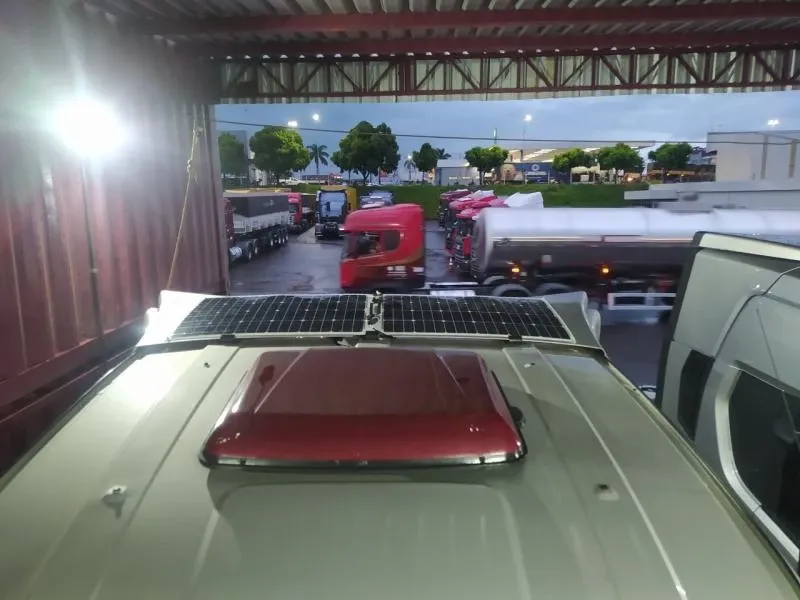
Two standard rectangular panels, mounted side by side on the flat part of the cab roof.
- Voltage: 36 V nominal, chosen to suit the trucks’ 24 V electrical system through a step-down charge controller
- Shape: symmetrical rectangles, with no inner corners to concentrate stress
- Service: either panel can be swapped on its own
The customer approved the change and we moved to production.
What we can and cannot claim
The fleet has run these panels since 2022, and the customer reordered almost every year until 2025. That is the evidence we have.
We did not run a controlled comparison between the two shapes on the road, so we do not quote a failure rate or a cost-saving percentage for this project.
Lessons for fleet and vehicle projects
| Question | Custom-shaped single panel | Two or more rectangular panels |
|---|---|---|
| Tooling and unit cost | Higher: custom layout and tooling | Lower: standard process |
| Stress under vibration | Concentrated at inner corners | Spread evenly |
| Lead time | Longer | Shorter |
| Replacement | Whole custom panel | One standard panel |
| Roof coverage | Slightly more | Slightly less |
A custom shape is sometimes the right answer, for example when the roof leaves no room for rectangles. It is worth asking your supplier to price and review both options before paying for tooling.
What to send us
- A roof drawing or photos with dimensions, including recesses, vents and antennas
- Battery voltage and the charge controller you plan to use
- Target power per vehicle and the number of vehicles
- Typical routes and climate
Send us your requirements and we reply within 24 hours.