I’ve noticed something interesting over the past year. More buyers are asking about flexible solar panels again.
But here is the catch: they aren’t just for RV hobbies or weekend camping anymore. I’m seeing real commercial projects—things like marine sensors, mobile telecom towers, and lightweight industrial roofs.
The question I hear most is: “Can a flexible panel finally do the job as well as a heavy, rigid one?”
A few years ago, my answer would have been a polite “maybe.” Today, thanks to PERC technology, that answer is a much more confident “yes.”
What Exactly Is PERC? (The Mirror Trick)
PERC stands for Passivated Emitter and Rear Cell. That sounds like a lot of engineering jargon, but the idea is actually quite simple.
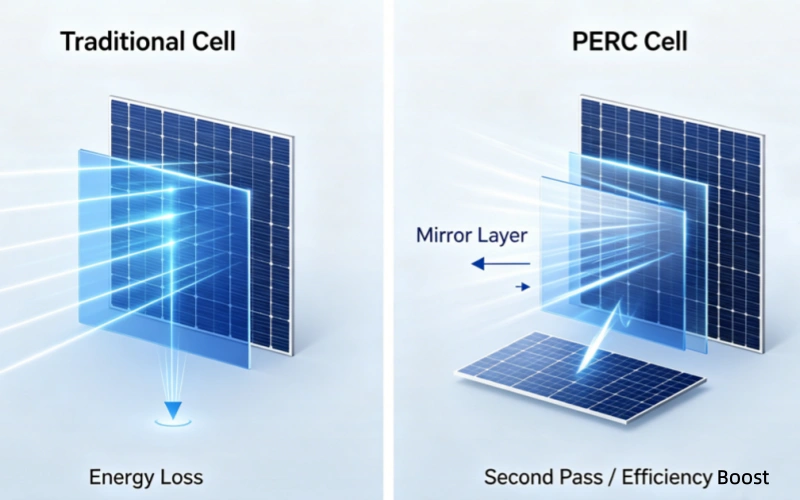
Think of a traditional solar cell like a window. Sunlight hits it, and some of that light becomes electricity. But a lot of it just passes straight through the cell and gets lost as heat.
PERC cells add a tiny reflective layer on the back. It acts like a mirror. When sunlight misses the chance to create power the first time, this mirror reflects it back up for a second try.
According to the National Renewable Energy Laboratory (NREL), this simple reflection gives the cell a much-needed boost in efficiency compared to the older designs we used for decades.
Better Output From Smaller Installation Areas
This is probably the biggest advantage buyers notice first.
Many off-grid systems simply do not have enough mounting space for large rigid panels.
For example:
- RV roofs are crowded
- marine decks have irregular shapes
- remote monitoring stations use compact mounts
- portable power kits need lightweight folding panels
Higher-efficiency PERC cells help solve this problem.
A smaller module can often produce the same output that previously required a larger installation area.
That gives engineers more flexibility during system design.
Improved Performance in Low-Light Conditions
Flexible solar systems are not always installed in perfect environments.
Cloud cover happens. Shadows happen.
Early morning and late afternoon operation also matter in real projects.
PERC cells are known for better low-light response compared with older conventional cell structures.
That does not mean they magically create power in the shade.
But they can maintain more stable generation during less-than-ideal sunlight conditions.
For portable or remote systems, that extra energy can make a noticeable difference over time.
Especially during winter months.
Why Space Is Your Most Expensive Resource
Efficiency matters in every project. But it matters most when you are running out of room.
Unlike standard glass panels, flexible modules are usually installed where space is a headache:
- Curved boat decks with irregular shapes.
- Mobile surveillance units with tiny mounting footprints.
- Remote monitoring stations on narrow poles.
In these situations, you can’t just “add more panels” to get more power. You have to make the panels you have work harder.
PERC cells allow a smaller module to produce the same energy that used to require a much larger installation area. This gives you more room to breathe during the design phase.
Handling the Heat (Literally)
Most people don’t realize that solar panels actually hate the heat. When a panel gets too hot, its power output drops. This is a big deal for panels glued to a van roof or a metal deck in the desert.
PERC cells handle this better. Because that back layer reflects unused light instead of letting it turn into trapped heat, the cells stay slightly cooler.
It’s a small difference that adds up to a lot of extra “juice” by the end of a long, hot summer day.
Is PERC Always the Right Choice? (The Honest Truth)
I’ll be the first to tell you that PERC isn’t a magic fix for everything.
If your project is a simple, low-power setup—like a basic trickle charger for a battery that stays in the shade—the extra cost might not be worth it. For short-term field equipment where weight doesn’t matter, older, cheaper tech might be just fine.
But if your project has a “High Energy Gap Risk”—meaning you have limited space but your sensors cannot go offline—PERC is the safety net you need.
Standard vs PERC Flexible Solar Modules
| Feature | Standard Flexible Modules | PERC Flexible Modules |
| Efficiency | Moderate | Higher |
| Low-Light Performance | Basic | Improved |
| Heat Management | Standard | Better |
| Space Needed | Average | More Compact |
| Typical Cost | Lower | Slightly Higher |
What Buyers Should Look for Beyond “PERC”
One important thing I always mention:
Not all PERC flexible modules are built the same way.
Cell technology is only one part of performance.
Buyers should also evaluate:
- encapsulation quality
- waterproof protection
- bending tolerance
- UV resistance
- connector reliability
- temperature ratings
- manufacturer testing standards
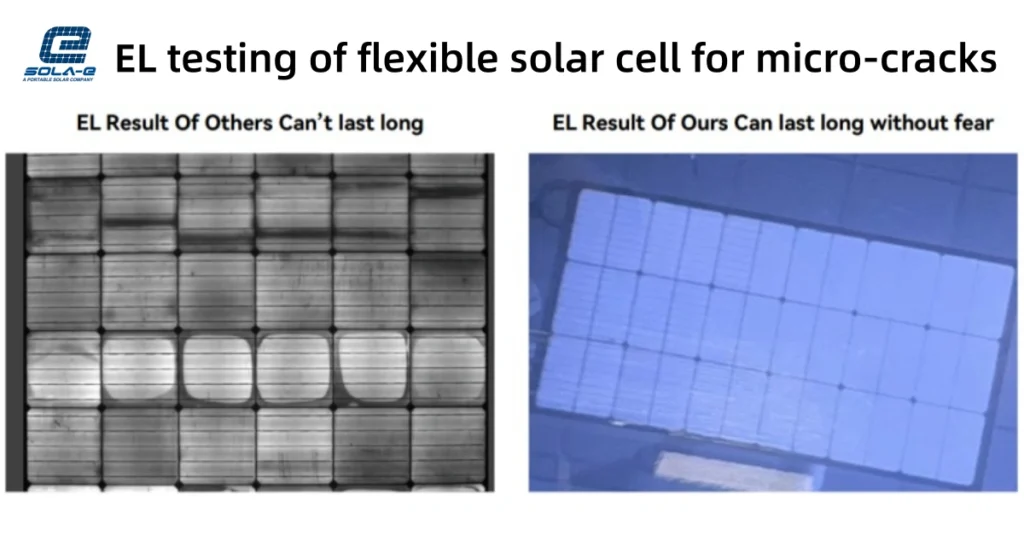
A poorly built module with good cells can still fail early in harsh outdoor conditions. Long-term reliability matters just as much as efficiency.
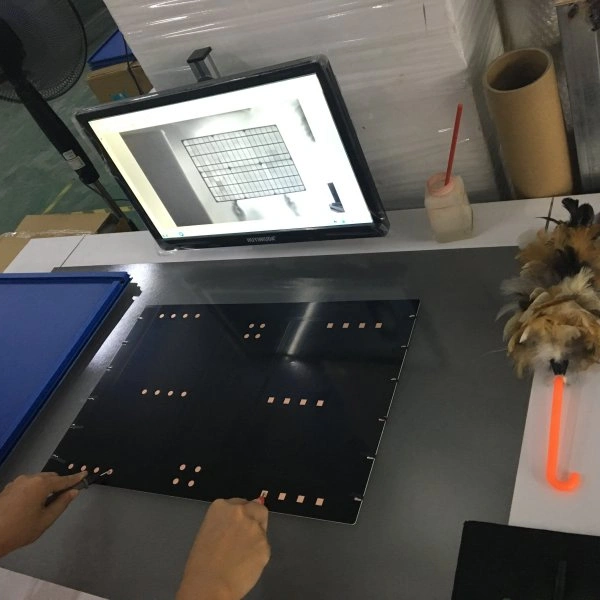
Long-term reliability matters just as much as efficiency.
Where PERC Flexible Solar Modules Make the Most Sense
In my experience, PERC flexible modules work especially well in projects where weight and installation flexibility matter as much as raw wattage.
Some common examples include:
RV and Overlanding Systems
Lightweight panels reduce roof load while improving charging efficiency during travel.
Marine Applications
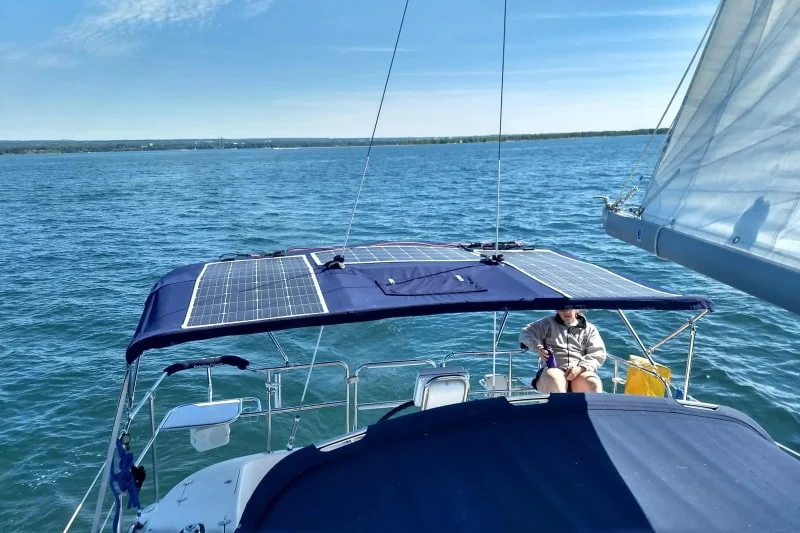
Boat decks often have curved or limited mounting surfaces. Flexible PERC modules are easier to integrate into these spaces.
Portable Power Stations
Higher efficiency helps maximize charging performance during outdoor use.
Remote Monitoring Equipment
Compact off-grid systems benefit from better energy production in limited installation areas.
Lightweight Commercial Rooftops
Some rooftops cannot safely support heavy glass panels. Flexible modules offer another option.
FAQ
Q1: Are PERC flexible solar modules better in cloudy weather?
A: They generally perform better in low-light conditions compared with older standard solar cell structures. However, all solar panels still produce less power under heavy cloud cover.
Q2: How efficient are PERC flexible solar modules?
A: The exact efficiency depends on the manufacturer and module design, but PERC cells usually offer higher efficiency than conventional mono solar cells used in older flexible panels.
Q3: Do PERC flexible solar panels run cooler?
A: They can reduce some heat-related losses because the rear layer reflects unused light back into the cell instead of converting as much energy into heat.
Q4: Are PERC flexible solar modules suitable for marine environments?
A: Yes. Their lightweight structure and flexibility make them popular for boats and marine systems, especially where curved surfaces or weight restrictions are important.
Q5: What is the difference between PERC and standard mono solar cells?
A: PERC cells include an additional rear passivation layer that helps capture more sunlight and improve overall efficiency compared with traditional mono cell structures.
Not Sure if PERC is the Right Investment for Your Project?
Stop guessing based on spec sheets. Efficiency is relative to your specific environment. Our engineering team can provide a 2026 Power Simulation Report based on your unique installation area.
Simply send us your:
- Total installation area (dimensions)
- Target daily energy output (Wh)
- Typical environmental temperatures & shading conditions
*Includes a detailed ROI analysis comparing PERC vs. Standard Mono modules for your specific site.
Sam | Solar Application Specialist
With over 10 years of experience in the photovoltaic manufacturing industry, Sam specializes in risk control and application engineering for portable battery chargers and marine solar panel solutions. He helps OEMs and distributors bridge the gap between technical specs and real-world performance.