
Why foldable solar panels lose power: cracks, folds and drops
Foldable panels are carried, folded, dropped and shaken in car trunks. Why crack resistance, hinge life and drop resistance decide how long a foldable panel keeps its power.
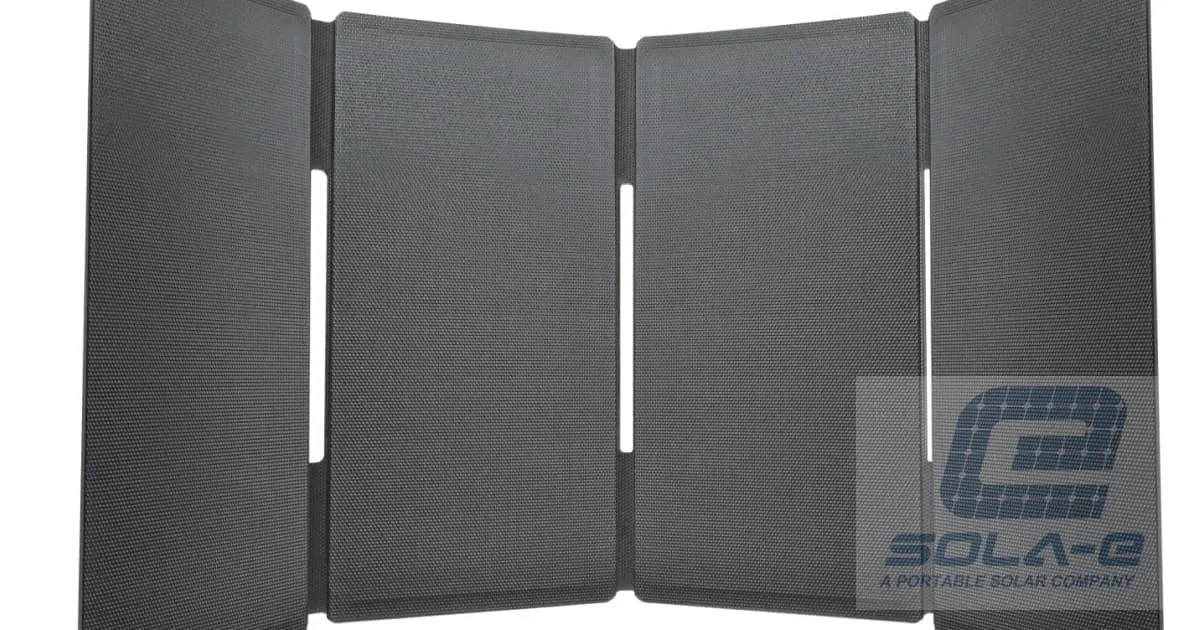
Short answer: a foldable panel rarely dies all at once. It loses power a little at a time, as handling cracks its cells and wears its hinges. Three things decide how long it lasts: how well the cells resist micro-cracks, how many folds the hinges survive, and whether it can take a drop. For a brand, these decide your return rate and reviews in year two.
A harder life than a rooftop panel
A rooftop panel is installed once and never touched. A foldable panel, in one season, is:
- folded and unfolded hundreds of times,
- carried by its handle and leaned against rocks and bumpers,
- shaken for hours in a car trunk or truck bed,
- dropped now and then, and
- left out in rain and dust.
Every one of these puts mechanical stress on cells that are a fraction of a millimeter thick.
1. Micro-cracks: the slow power thief
A knock or a bend can start a crack too fine to see. The panel still works and still looks perfect. But each trip and each fold extends the crack, until part of a cell is cut off and the output drops.
Customers experience this as “it used to give 100 W, now it gives 70”. By then the panel is out of the return window, and the review is written.
What to look for: cells fully laminated and supported so they can’t flex on their own, and EL imaging of every panel so none ships with a crack already started.
2. Vibration in transit
Road vibration doesn’t only affect roof panels. A folded panel riding in a trunk is shaken at the same low frequencies, trip after trip. Panels whose cells are loosely held, or whose segments can rub and knock against each other, crack this way without ever being dropped.
What to look for: a rigid, fully laminated build in which the cells are bonded across their whole area.
3. Hinges: where foldables fail first
The fold line carries the wiring between segments. Each fold bends that wiring and the layers around it. Cheap hinges fail by breaking the conductor, which takes out a whole segment, or by letting water in.
What to look for: a stated fold-cycle test. A panel unfolded and packed twice a day for five years sees about 3,600 folds. We test our hinges to 50,000+ folds without power loss.
4. Drops and knocks
Sooner or later a portable panel falls off a tailgate or a table. Impact can crack cells directly, split the junction box, or open a seam.
What to look for: a drop test on the finished product, and a sealed build. Our foldable panels are drop-tested with no structural damage, and our UT series is rated IP67 in a third-party test.
Why this matters to your brand
| Weak point | What your customer sees | What it costs you |
|---|---|---|
| Micro-cracks | Falling output after a few months | Warranty claims, bad reviews |
| Hinge failure | A dead segment or dead panel | Returns |
| Drop damage | Cracked cells, broken junction box | Returns, safety complaints |
| Water ingress | Corrosion, dead USB ports | Returns |
How our foldable panels are built
- Fully laminated ETFE (UT series): cells sealed and supported in one piece, with no stitched seams.
- EL imaging of every panel before shipment, with EL images of samples on request.
- 50,000+ fold cycles tested on the hinge.
- Drop-tested, with no structural damage.
- IP67, tested to EN 60529 by a third-party lab.
See our 100–400 W foldable panels and 15–80 W solar chargers.