
What size solar panel for a portable power station? A quick rule
Divide the station's capacity in Wh by about 3.4 for a one-day recharge: about 100 W for 300 Wh, 300 W for 1,000 Wh. Worked examples and voltage checks.
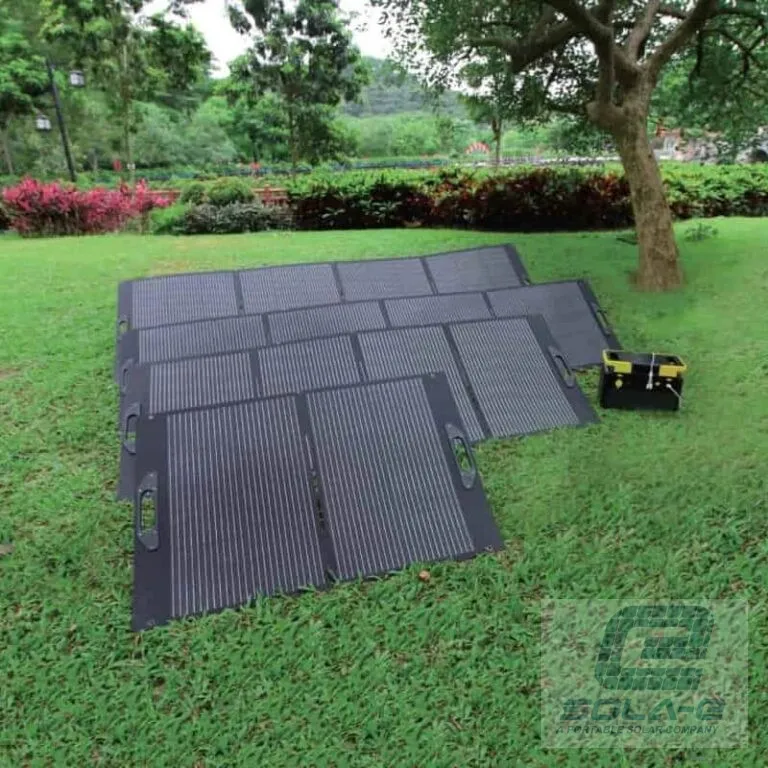
Short answer: pick a panel (or pair of panels) rated close to the power station’s maximum solar input, without exceeding its voltage limit. As a rule of thumb, a panel refills a station in about one day of good sun when its wattage is roughly the station’s capacity in watt-hours divided by three to four.
Three numbers to check on the power station
- Battery capacity (Wh): how much energy the station holds.
- Maximum solar input (W): the most solar power it will accept.
- Solar input voltage range (V): the panel’s open-circuit voltage must stay below the maximum, with a margin for cold weather.
The rule of thumb
Panel watts ≈ station capacity (Wh) ÷ peak sun hours ÷ 0.75 (for real-world losses)
With about 4.5 peak sun hours, that works out to roughly capacity ÷ 3.4. Many buyers settle a little lower and accept slightly longer charging.
Worked examples
| Station capacity | Panel for about one day of sun | Our options |
|---|---|---|
| About 300 Wh | 100 W | UT100H, UC100W |
| About 500 Wh | 120–200 W | UT120H, UT150H, UC200W |
| About 1,000 Wh | 200–400 W | UT200H + UT200H, UT400H, UC400W |
| About 2,000 Wh | 400–800 W | Two UT400H panels, if the station accepts the voltage |
Always cap the panel wattage at the station’s maximum solar input, and check voltage limits.
Watch the voltage
Our UT300H and UT400H have a 47 V open-circuit voltage. Many larger stations accept that, but some smaller ones top out around 28 V. Two panels in series add their voltages, so check combined Voc before wiring in series. Our power station matching guide explains series, parallel and connectors in more detail.
For bundle brands
If you sell power stations, send us their specifications. We’ll recommend panels for each one, check voltage and current, and supply the right cables, under your brand from 50 pieces per model.