
US plug-in solar laws: what balcony kit brands need to know
Ten US states now allow plug-in balcony solar, most with a 1,200 W AC cap and UL 3700 or equivalent certification. What the laws require, and what that means for the panels in your kit.
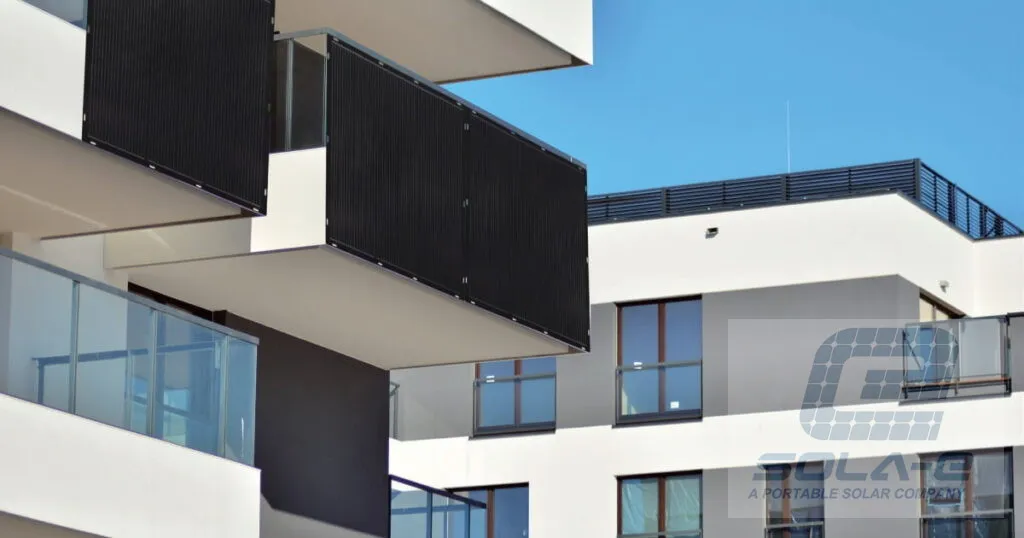
Short answer: as of November 2026, ten US states have signed laws that let households plug a small solar system into a wall outlet without a utility interconnection agreement. Most cap the system at 1,200 W of AC output per home and require it to be certified for plug-in use, in practice under UL 3700. California’s law and Colorado’s take effect on January 1, 2027. For kit brands, certification is now the main hurdle, and it covers the whole system, panels included.
This article summarizes public reporting as of November 2026. It is not legal advice. Check each state’s law before selling into it.
Where plug-in solar is legal
Utah passed the first law, HB 340, in 2025. By September 2026, nine states had signed plug-in solar laws: Colorado, Connecticut, Maine, Maryland, New Hampshire, New Jersey, Utah, Vermont and Virginia (PV Tech). California became the tenth on September 30, 2026.
| State | Status | Takes effect | Size limit |
|---|---|---|---|
| Utah | Signed, 2025 | In force | 1,200 W |
| California (SB 868) | Signed Sept. 30, 2026 | January 1, 2027 | 1,200 W AC per home |
| Colorado | Signed, 2026 | January 1, 2027 | 1,920 W |
| New Jersey | Signed, 2026 | March 1, 2027 | Check the law |
| Connecticut, Maine, Maryland, New Hampshire, Vermont, Virginia | Signed, 2025–2026 | Varies | 1,200 W in most; check each law |
| New York (SUNNY Act) | Passed the legislature, awaiting the governor | Immediately if signed | 1,200 W AC |
Sources: PV Tech, pv magazine USA, Engadget, WAMC. In 2026 alone, 35 states considered plug-in solar bills, so this table will keep changing.
What the laws typically require
California’s SB 868 is a good example, because the other laws follow a similar pattern. A qualifying device must (pv magazine USA):
- stay at or below 1,200 W of AC output per dwelling;
- connect through a standard household outlet and offset the home’s own use;
- meet the National and California Electrical Codes;
- carry UL or equivalent certification as a plug-in PV system;
- shut itself off during a grid outage, so it never feeds power onto lines a utility crew is working on.
Devices that meet every condition are exempt from utility interconnection rules. In California that exemption runs until 2030.
UL 3700: the certification that matters
UL Solutions launched a certification program for plug-in solar in January 2026, based on its UL 3700 outline. It requires protection against overloads, against contact with live parts and against current flowing the wrong way (TechMyMoney).
Certified hardware is only starting to appear. The first microinverters were announced in mid-2026: Hoymiles’ HiFlow Pro under UL 3700, and APsystems’ EZ1, certified to the standard by CSA Group.
The part that affects panel choice: some states look at the whole kit, not only the inverter. Maine, New York’s bill and Vermont require the inverter, panels, cables and mounting hardware all to meet UL 3700 or a comparable standard (pv magazine). A certified microinverter alone may not be enough. Depending on the kit, the lab may also test the panels to UL 61730, the US module safety standard, and UL 3700 only covers PV circuits up to 64 V open-circuit voltage (ANSI Webstore), which limits how many panels can be wired in series.
What this means for the panels in your kit
1. Plan certification at the system level. Decide early which lab will certify the kit, and involve your panel supplier. The lab will need panel samples, construction details and material data, and may test the panels to UL 61730. Build that time into your launch plan.
2. Size the kit to the cap. The limit is on AC output, so the inverter decides. A 1,200 W cap leaves room for three to five panels of 200–250 W, depending on the inverter.
3. Weight decides where renters can mount it. Most buyers are renters and condo owners hanging panels on a railing. A glass-framed panel often weighs 10 kg or more. Our glass-free balcony panels weigh 2.8–4.25 kg (6.2–9.4 lb), which is easier to lift, hang and get approved by a landlord.
4. Plan for 120 V outlets and short cables. US kits plug into 120 V outlets, unlike the 230 V systems in Europe. Keep cable runs short and use connectors your certification lab accepts.
5. Write honest marketing. Kits that promise to “eliminate” the power bill will draw complaints. At 1,200 W, a kit offsets part of a home’s daytime use: a refrigerator and some small appliances.
Our balcony panels for US kits
| Model | Power | Cells | Size | Weight |
|---|---|---|---|---|
| USF-135s | 135 W | PERC | 1002 × 792 mm | 2.8 kg |
| USF-200sb | 200 W | PERC | 1160 × 1002 mm | 4.1 kg |
| USF-210Hb | 210 W | HPBC | 1160 × 900 mm | about 3.9 kg |
| USF-230Hb | 230 W | HPBC | 1150 × 990 mm | 4.25 kg |
All are 2.6 mm (0.10 in) thick with an ETFE surface and no glass. Four USF-230Hb panels give 920 W DC; five USF-210Hb give 1,050 W DC.
Our balcony panels are not UL- or IEC 61730-certified today. If your kit is going through UL 3700 or an equivalent certification, we supply samples, construction details and material documentation for your lab, and build to the configuration you certify. MOQ is 50 pieces per model. See the balcony panel range and our renters and apartments guide.
FAQ
Which US states allow balcony solar? As of November 2026: Utah, Colorado, Connecticut, Maine, Maryland, New Hampshire, New Jersey, Vermont, Virginia and California, with New York’s bill awaiting the governor. Several laws take effect in 2027.
Do the solar panels themselves need UL certification? It depends on the state. California requires the plug-in PV system to be certified. Maine, Vermont and New York’s bill go further and require the panels, cables and mounting to meet UL 3700 or a comparable standard too.
Is 1,200 W the DC panel rating or the AC output? In California and most states, the cap is on AC output per home, which the inverter controls.
Is plug-in solar the same as Germany’s balcony solar? The idea is the same. Germany allows up to 800 W of inverter output and runs on 230 V outlets. US kits must be certified for 120 V systems, and most US states allow up to 1,200 W.