
Flexible Solar Panel With Per-Cell Bypass Diodes: A Shade-Tolerance Case Study for RV Roofs
How a 100W flexible solar panel with 38 bypass diodes keeps producing in partial shade on RV roofs, and how we solved cell cracking in lamination.
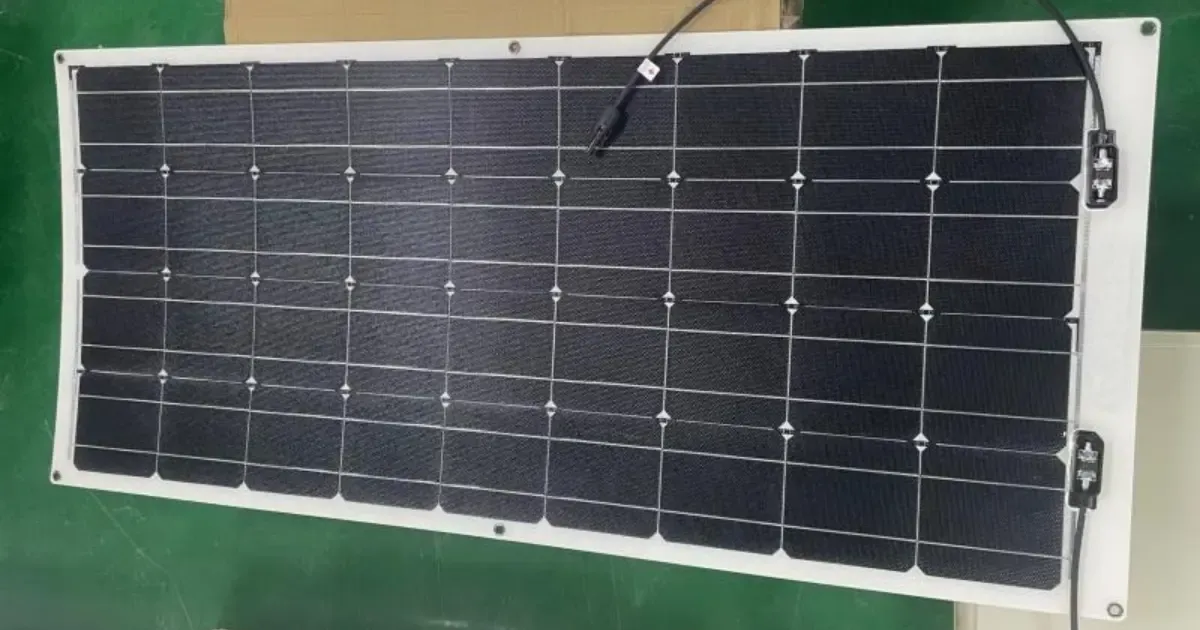
Factory sample, 2022. A 36-cell, 100W ETFE flexible panel with one bypass diode per cell plus one in each junction box, 38 in total. MC4 connectors and corner mounting eyelets. Custom ODM design for a U.S. client.
In 2022, a U.S. client came to us with a problem they were seeing in the field.
Their flexible rooftop solar panels were losing a lot of power whenever part of the panel was in shade.
On an RV roof, that’s not a rare event. It’s a normal day.
Quick Answer: Why Does Partial Shade Hurt Flexible Solar Panels So Much?
In a standard panel, cells are wired in a series string. If one cell is shaded, it can limit the current of the whole string, so output can drop far more than the shaded area would suggest.
A bypass diode is a small component that gives current a way around a shaded section. Most panels use a few diodes, each covering a group of cells. This project took a different route: one diode for every cell.
The Problem: Shade Is Unavoidable on a Vehicle Roof
Vents, antennas, air conditioners, roof racks, and nearby branches all cast shadows. We covered why this matters for heat in our guide to thermal management for flexible RV solar panels. A shaded cell in a series string can also be pushed into reverse bias and heat up locally, which is one cause of photovoltaic hot spots.
For RVs, campervans and other vehicle-mounted systems, that’s a design limit, not an edge case. Our client needed a panel that kept producing when a vent or antenna got in the way.
The Design: One Bypass Diode Per Cell
The client’s solution was simple to describe:
- one bypass diode for each of the 36 cells;
- plus one diode in each junction box;
- 38 diodes in total on a 100W ETFE flexible panel.
The idea is that each cell can be bypassed on its own. A shaded cell no longer drags down a whole group of neighbors.
ETFE is the clear, tough polymer film used on the panel’s front surface. It’s light, which is why it’s popular for flexible and mobile solar.
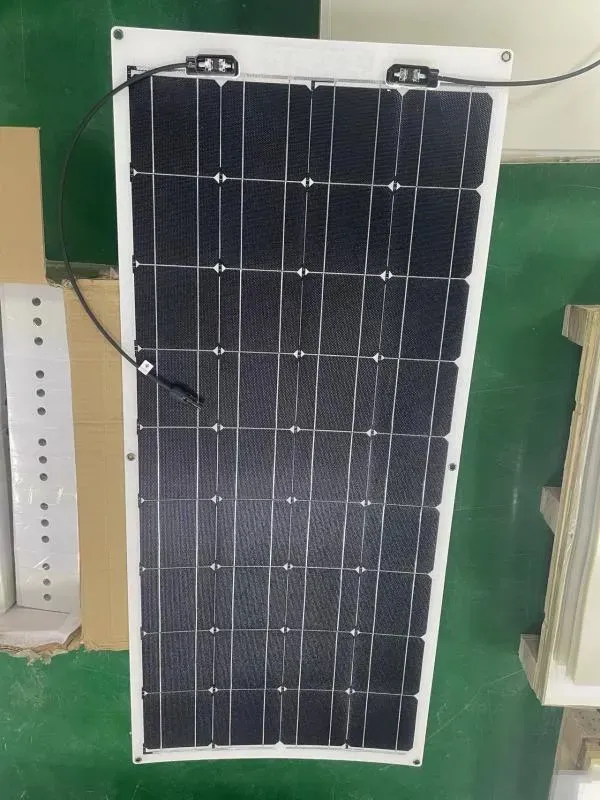
100w etfe flexible solar panel sample
The Manufacturing Challenge: Rigid Diodes Inside a Flexible Panel
Designing the circuit was the easier half. Building it was harder.
Miniature bypass diodes are rigid. A flexible panel is made by pressing layers together with heat, a step called lamination. In our early trials, the pressure of thermal pressing pushed on the hard diodes and cracked cells around them. It happened consistently, not once.
That’s the kind of problem that doesn’t show up on a drawing.
The Fix: A Cushion Where the Stress Lands
We added EPE cushioning material to the lamination stack at each diode position.
The cushion absorbs the mechanical stress from the rigid component during pressing. It does this without affecting how much light reaches the cells.
The change was small and local. It fixed the cracking at its source instead of trying to screen out damaged panels later.
Timeline and Results
- 2022: samples confirmed
- 2023: first production order
- 2024: order volume grew substantially
We don’t have a bigger claim than that, and we’d rather not invent one. What the timeline shows is that the design moved from a field complaint to repeat production.
What This Means If You Build or Source Flexible Solar Panels
If you’re an outdoor power brand, RV solar supplier, or portable power station maker, here’s my plain take.
Shade tolerance isn’t a line on a spec sheet. It’s a field performance requirement. And a design that works on paper still has to survive the factory.
Questions worth asking your panel supplier:
- How are bypass diodes arranged, and how many cells does each one cover?
- How was cell cracking controlled during lamination?
- Has the panel been tested under real partial shading, not just full sun?
- Can the design be repeated across production runs?
For the wider system view, including how panels share a controller with other charging sources, see our piece on multi-source RV charging architecture. Manufacturing detail like this matters in other designs too. We ran into a related lesson in our modular solar panel case study.
FAQ: Bypass Diodes in Flexible Solar Panels
Q1: What does a bypass diode do in a solar panel?
It gives current a path around a shaded or underperforming section of cells, so that section doesn’t limit the rest of the string as much.
Q2: Does a flexible solar panel need more than one bypass diode?
Most panels use a small number of diodes, each covering a group of cells. How many you need depends on the cell layout and how much shading you expect. Roof panels near vents and antennas are a stronger case for finer segmentation.
Q3: Can shade damage a solar panel?
A heavily shaded cell in a series string can heat up locally, which is called a hot spot. Bypass diodes are one of the ways panels limit that risk.
Q4: Why is it hard to put many diodes in a flexible panel?
Diodes are rigid, and flexible panels are pressed with heat and pressure during lamination. Without protection, the hard components can crack neighboring cells.
Developing a Shade-Tolerant Flexible Panel for an RV or Vehicle?
If shading is part of your real-world conditions, the cell layout, diode strategy, and lamination stack need to be designed together.
Send us:
- your target wattage and system voltage;
- your roof or mounting area and known shading sources;
- your controller’s PV input limits;
- your connector and mounting requirements;
- your expected annual volume.
Send us your requirements and we reply within 24 hours.