
ETFE vs PET solar panels: which surface film lasts outdoors?
PET film can yellow and let moisture in within a year or two on a hot RV roof; ETFE is used for panels meant to last 10+ years. How to tell them apart, and which to choose.
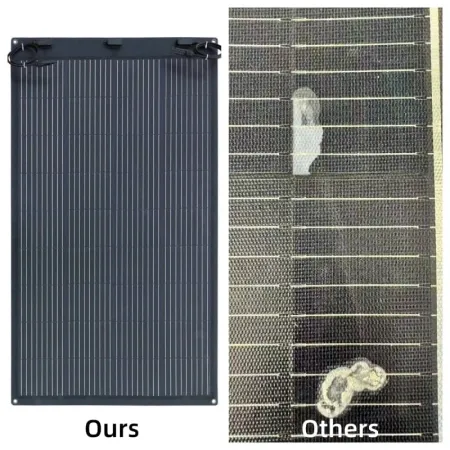
A flexible panel has no glass, so a polymer film protects the cells instead. That film is the first thing sunlight, heat, rain and dirt hit, and it largely decides how the panel ages. The two common choices are PET and ETFE.
PET: low cost, shorter life outdoors
PET (polyethylene terephthalate) is cheap and easy to laminate. Under strong UV and heat, it tends to yellow, go brittle and let moisture in at the edges, which leads to power loss and delamination. In our experience, PET panels used on RVs in hot climates can start to degrade within their first year or two.
PET is acceptable for low-cost products used occasionally, but it isn’t a good fit for panels that stay on a roof in the sun.
ETFE: built for long outdoor exposure
ETFE (ethylene tetrafluoroethylene) is a fluoropolymer that is highly resistant to UV, heat and chemicals. Its textured surface sheds dirt and water. ETFE panels hold their transparency much longer and resist yellowing and delamination. We use ETFE for panels expected to last 10 years or more.
On our USF RV panels, the ETFE surface sits over EVA or POE encapsulation, chosen per project and sealed by vacuum lamination.
Side by side
| PET | ETFE | |
|---|---|---|
| UV and heat resistance | Moderate | High |
| Yellowing over time | Common | Minimal |
| Surface | Smooth, holds dirt | Textured, sheds dirt and water |
| Cost | Lower | Higher |
| Best for | Occasional, low-cost use | RV roofs, balconies, IP67 foldables |
How to tell them apart
ETFE usually has a slightly textured, matte surface. PET is smoother and glossier. The surest way is to ask the supplier to state the front film and encapsulant in writing on the specification.
What we use
All our RV flexible panels, balcony panels and IP67 foldable panels and chargers use ETFE. If a project needs a lower price point, we’ll talk you through the trade-offs before quoting.