Introduction: Why Professional Power is Going Mobile
In the professional world, “portable solar” used to be a toy. A flimsy gadget for weekend camping.
In 2026, the script has flipped. Today, portable solar means professional-grade.
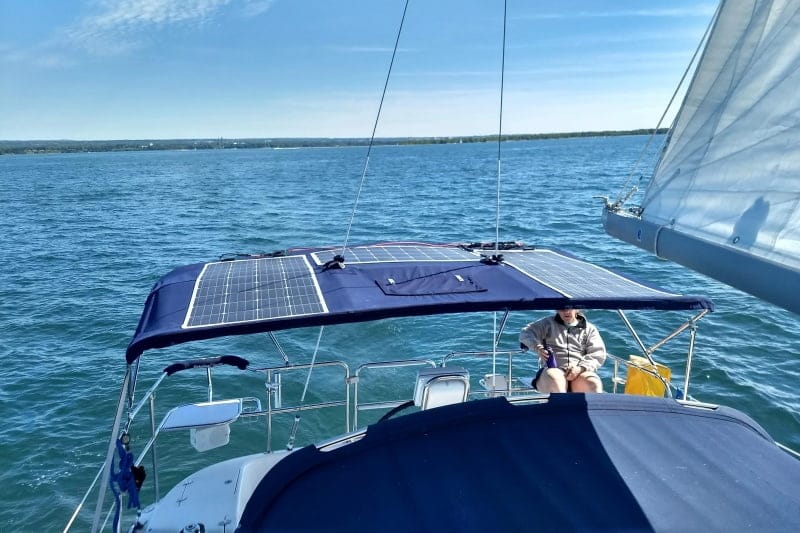
I’ve spent months talking to fleet managers and project leads. They are ditching fixed glass panels. Why? Because glass is heavy and stubborn. You can’t drill holes in every mobile asset, and you certainly can’t park every service van in the scorching sun just to charge a battery.
Portable solar panels solve the ultimate mobile dilemma: Park in the shade, power in the sun.
Our commercial portable solar solutions are engineered for high-stakes environments:
Off-grid business operations & remote construction sites.
Mobile workstations & field research equipment.
Logistics & fleet management (auxiliary power for cooling/tools).
When you hold a pro-grade panel, it should feel like industrial hardware, not a plastic folder.
The ETFE “Armor”
The top layer is your first line of defense. We use ETFE (Ethylene Tetrafluoroethylene). Unlike cheap PET coatings that yellow and crack within a year, ETFE is a fluoropolymer built for a 10-year lifespan.
Self-Cleaning: Rain washes away salt and dust.
Honeycomb Surface: These tiny bumps catch light at oblique angles, boosting power in early morning and late afternoon.
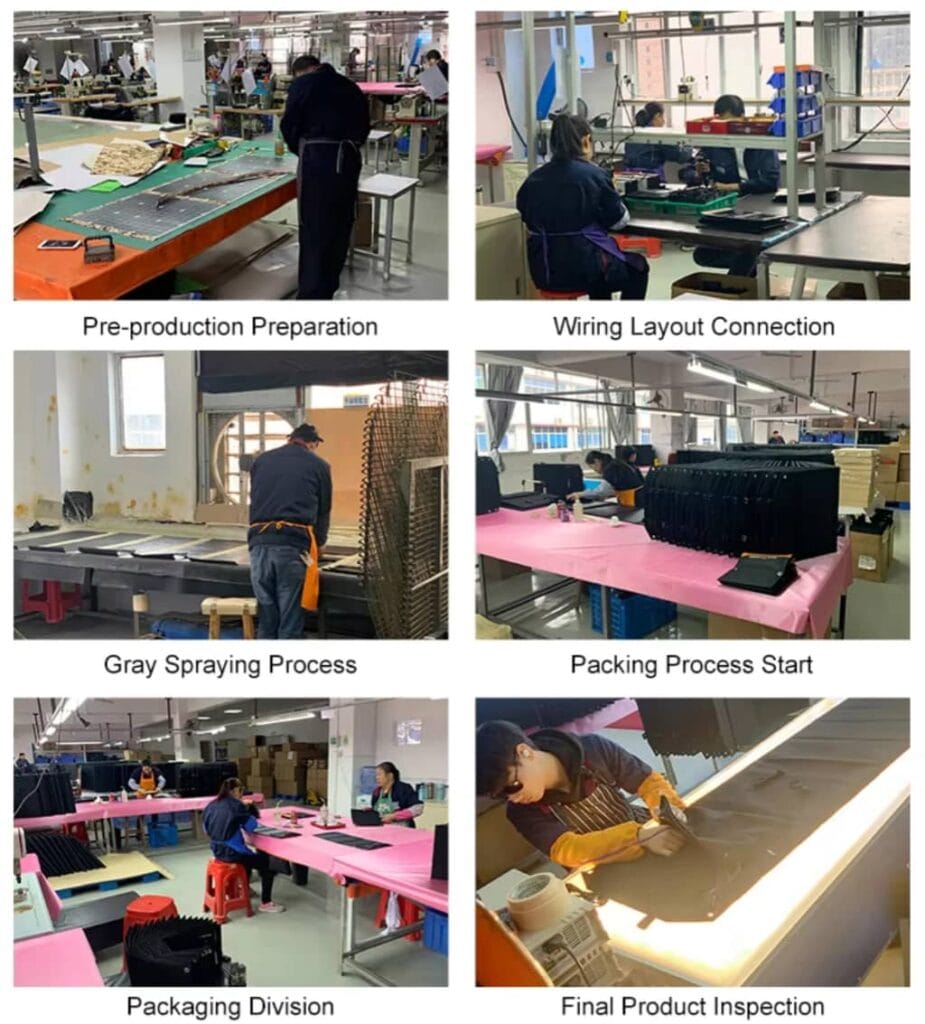
Our automated lamination line ensures the durability of folding solar modules.
10+ Years OEM Experience in specialized portable solar.
50MW Annual Production Capacity for large-scale procurement.
12-Step QC Process including 100% EL (X-ray) testing.
0.8% Defect Rate (Based on our 2025 internal quality audit).
The biggest shift in 2026 is the death of the “clunky adapter.”
USB-C PD 3.1 & Smart Integration
Many of our professional kits now feature USB-C PD 3.1 ports built into the junction box. They output up to 240W. You can plug a high-end workstation or a 5G drone directly into the panel. The panel “talks” to your device and sends the exact voltage needed.
Solar panels actually hate the heat. For every degree above 25°C, you lose power. On a 35°C day, your panel surface hits 65°C, losing 15% of its power to heat alone.
Not sure what wattage your project needs?
Most B2B solar failures happen because of poor sizing. Don’t guess and risk downtime in the field.
Send us your specs:
Device power draw (Watts)
Required usage hours per day
Your project’s geographic location
→ Our engineers will calculate your wattage, battery capacity, and ROI for free.
Section 5: Why “Cheap” is the Most Expensive Choice
We recently rescued a logistics fleet that tried to save $5,000 on budget fabric-backed panels. Within 14 months, moisture seeped into the seams. 30% of their panels failed.
They didn’t save money; they paid double for replacements. We transitioned them to fully laminated ETFE arrays.
The Result: 0% failure rate over 12 months and 12% lower maintenance costs.
Section 6: Sourcing Roadmap (7-Day Prototyping)
We don’t just sell panels; we build solutions.
CAD Design: Custom shapes and junction box placements.
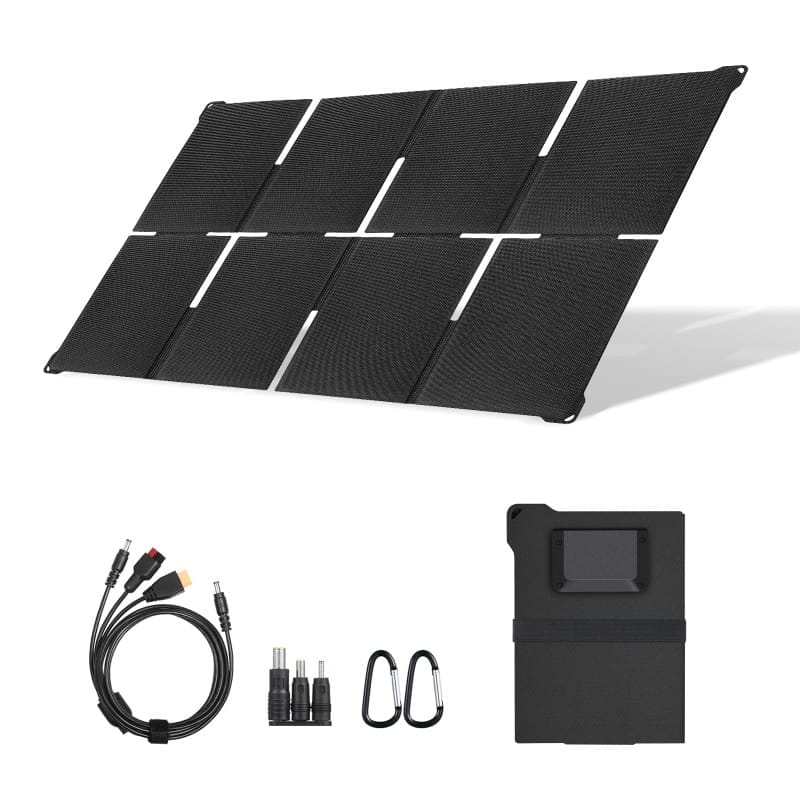
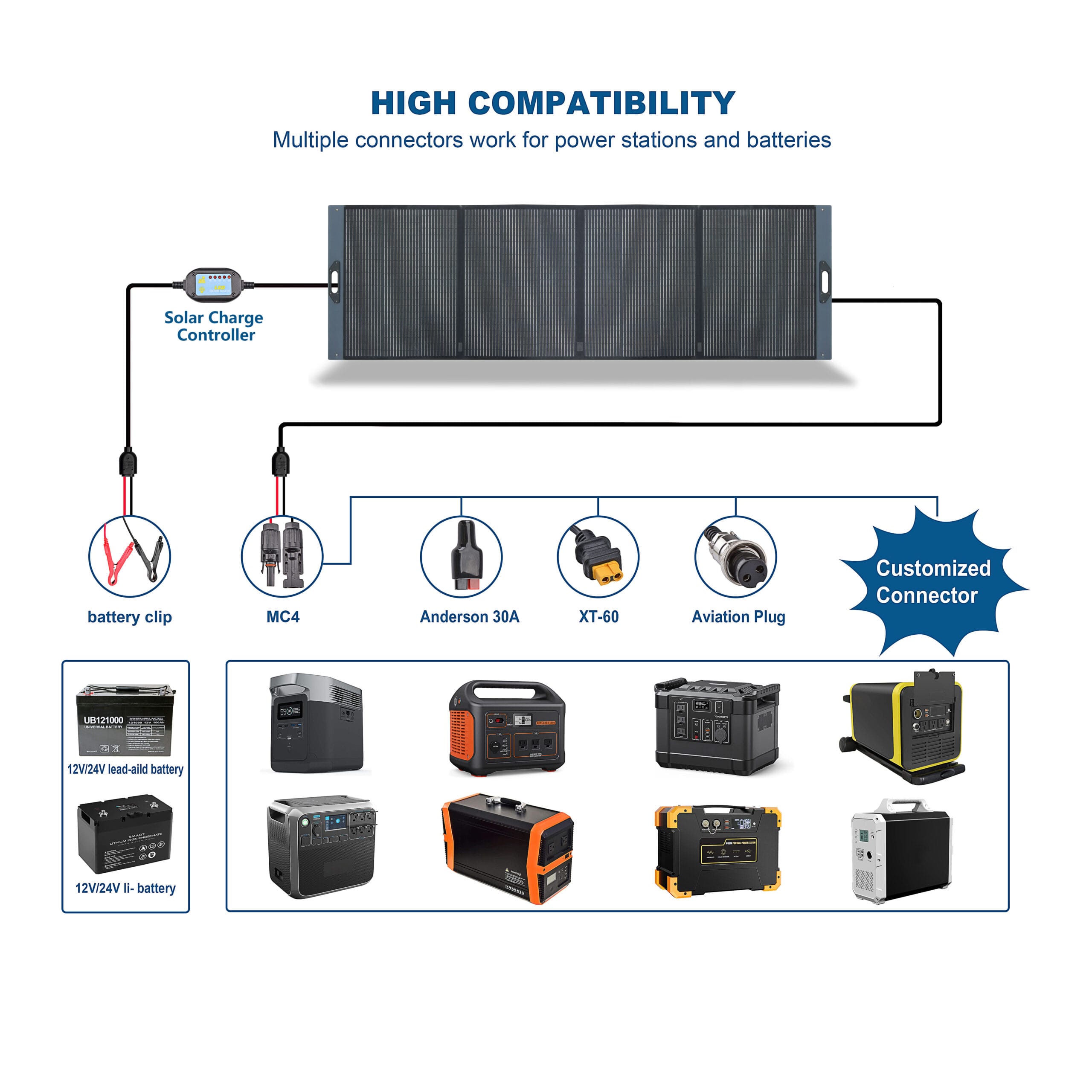
Custom Connectors: MC4, Anderson, XT60, or M12 waterproof leads.
Rapid Prototyping: A working sample in your hands in 7-10 days.
If you are sourcing for a fleet or a remote project, you probably have a few specific concerns. Here is the “straight talk” on the most common issues.
Q1: Why is my 100W panel only producing 70W-80W in the field?
It isn’t a defect. Standard Test Conditions (STC) happen in a lab at 25°C. In the real world, panels get hot. For every degree above 25°C, you lose about 0.4% power. On a summer day, a 20% drop is normal. Pro Tip: Always “over-panel” by 20% to ensure your devices stay powered during peak heat or haze.
Q2: Are portable solar panels truly waterproof?
Most high-quality panels are IP67 rated. This means they love a rain shower and wash away dust easily. However, the junction box (where the ports are) is the sensitive heart. While the panels can handle a storm, we advise keeping the output ports covered and dry to prevent long-term corrosion.
Q3: Can I plug the panel directly into my professional laptop?
In 2026, the answer is Yes—if it has USB-C PD 3.1. Older panels required a battery box to regulate voltage. Our latest pro-grade panels feature smart junction boxes that “talk” to your MacBook or workstation, delivering the exact voltage needed up to 240W.
Q4: What is the real lifespan of ETFE vs. PET?
It’s the difference between a tool and a consumable. PET panels usually yellow and crack within 1–2 years. ETFE panels (like ours) are built for a 10-year lifespan. If your project is long-term, ETFE is the only choice that protects your ROI.
Q5: Do you offer custom connectors for OEM projects?
Absolutely. We understand that industrial sensors often use specialized leads. We can customize your order with MC4, Anderson, XT60, or M12 waterproof connectors directly from the factory.
Sam | Solar Application Specialist
With over 10 years of experience in the photovoltaic manufacturing industry, Sam specializes in risk control and application engineering for portable battery chargers and marine solar panel solutions. He helps OEMs and distributors bridge the gap between technical specs and real-world performance.
In 2026, energy independence for your business is a strategic tool. Choosing quality over the lowest bid ensures your team stays in the field, not in the repair shop.
Before You Contact Any Supplier
Don’t place a bulk order until you get clear answers to these 3 questions:
Q1: EL Testing – “Can you provide EL (X-ray) test reports for every batch?”
Q2: Construction – “Is the panel fully vacuum-laminated or just stitched fabric?”
Q3: Real Data – “What is your verified defect rate from the last 12 months?”
The Reality Check: Most suppliers won’t have clear answers. We do. If you want transparent data and engineering-grade reliability,Talk to Our Engineers.
⚠️ Attention: 30%–50% of off-grid projects fail in winter due to under-sizing.
Don’t risk costly field maintenance. Send us your project specs (Device Power, Working Hours, and Location) and get expert feedback within 24 hours.