The “Sunburn” Problem You Didn’t See Coming
I’ve seen it happen dozens of times. A maker builds a beautiful outdoor sensor, sticks a shiny mini solar panel on top, and leaves it in the sun. Six months later, that shiny panel looks like a piece of old Scotch tape left on a window—yellow, cracked, and barely working.
Most people think “a solar panel is a solar panel.” But when it comes to ETFE vs PET mini solar panels, the difference is literally skin deep. If you want your project to last longer than a summer vacation, you need to know what’s happening under the laminator.
Table of Contents
1. The Engineering Secret: Lamination vs. Dropping
Before we talk about materials, we have to talk about how these tiny powerhouses are actually built. Our engineers always point out a massive divide in the manufacturing process.
The Lamination Process (ETFE & PET)
High-quality panels like our Mini PET Series and Rigid Mini ETFE Series are made using a Vacuum Heat Laminator.
- It’s the same tech used for massive roof panels.
- Heat and high pressure fuse the layers into one dense, flat sandwich.
- This creates a tight seal that keeps moisture—the enemy of solar cells—locked out.
The Epoxy “Dropping” Method
You might see some very cheap, domed panels on the market. These aren’t laminated. Instead, workers manually “drop” a liquid A+B resin onto the cells.
- It looks beautiful and glossy at first.
- The Trap: Resin is chemically sensitive to UV rays. Over time, the sun literally “cooks” the resin, causing it to turn yellow and brittle.
2. ETFE: The Rugged High-Performer
If you are building something for the “Great Outdoors,” ETFE (Ethylene Tetrafluoroethylene) is your best friend. It’s a fluorocarbon-based polymer that is incredibly tough. According to research from the National Renewable Energy Laboratory (NREL), ETFE is widely used in solar applications because of its high UV resistance and light transmission.
- Self-Cleaning: ETFE is naturally non-stick. Dust and bird droppings usually wash away with a little rain.
- Light Transmission: It lets more sunlight through to the cells compared to PET, meaning better efficiency.
- Heat Resistance: It handles high temperatures without bubbling or peeling.
I generally recommend our Rigid Mini ETFE Series for professional solar panels for IoT sensors or marine environments where the sun is relentless.
3. PET: The Economic Workhorse
Does everyone need ETFE? Honestly, no. PET (Polyethylene Terephthalate) is the same stuff used in soda bottles, but reinforced for solar use.
- Budget-Friendly: It’s significantly cheaper to produce.
- Short-Term Projects: If you’re making a toy or a classroom science project, PET is perfect.
- The Lifespan Trade-off: PET will eventually degrade under heavy UV exposure. It’s a “get what you pay for” situation. You can read more about the long-term specs in our full ETFE vs PET guide.
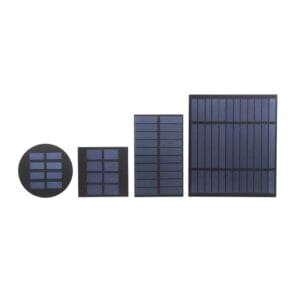
4. ETFE vs PET Mini Solar Panel Comparison
| Feature | Industrial Series (ETFE) | Consumer Series (PET / Epoxy) |
|---|---|---|
| Technology | ETFE Lamination | PET Lamination / Epoxy Resin |
| Manufacturing Process | High-Temp Vacuum Lamination (Cells fused with ETFE film under heat & pressure) | Glue Dropping (Epoxy) or Lamination (PET)(Liquid resin curing or standard thermal pressing) |
| Durability (Lifespan) | 5 - 7 Years (Marine Grade)(UV & Salt Resistant) | 1 - 3 Years (Standard)(Good for non-permanent outdoor use) |
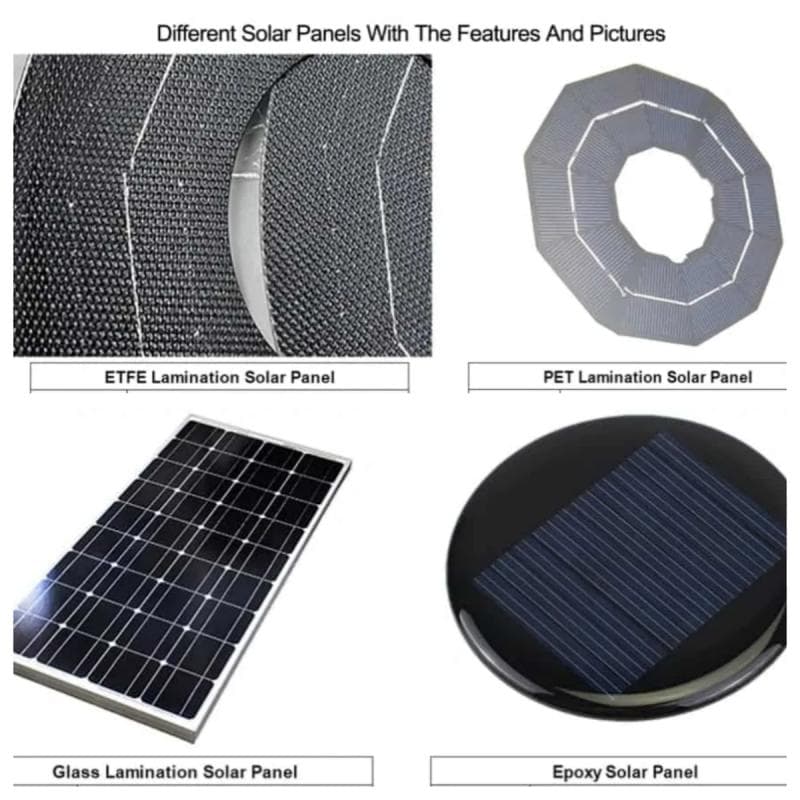
| Surface Finish | Matte / Honeycomb Texture(Non-stick, self-cleaning) | High Gloss (Epoxy) or Matte (PET)(Crystal clear or smooth finish) |
| Key Benefit | Anti-Yellowing & Crack Resistant(Ideal for harsh environments) | Cost-Effective & High Aesthetics(Best balance of price and look) |
| Best Application | IoT Sensors, Marine Buoys, GPS | Solar Toys, Garden Lights, Education Kits |
| Action | Explore ETFE Modules | Explore PET/Epoxy Modules |
5. How to Spot the Difference in the Wild
It’s hard to tell them apart just by looking at a tiny thumbnail image online. Here is my “cheat sheet” for your next purchase:
- Texture: ETFE often has a slightly “bumpy” or honeycombed texture to trap more light. PET is usually smooth.
- Feel: ETFE feels a bit more like a high-end Teflon pan—slightly soft but incredibly tough. PET feels like hard, stiff plastic.
- Price: If the price seems “too good to be true,” it’s likely PET or, worse, Epoxy.
6. Typical Applications
Different materials suit different environments.
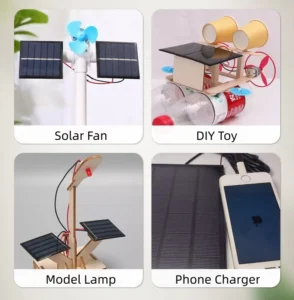
- ETFE panels are widely used for outdoor IoT sensors, marine electronics, and industrial monitoring devices.
- PET panels are common in toys, DIY electronics, and short-term solar gadgets.
Choosing the right material depends on how long your device will stay outside.
7. ETFE vs PET: Quick Summary
- ETFE lasts much longer outdoors
- PET is cheaper but degrades faster
- Epoxy panels should be avoided for serious projects
8. FAQ
1.Do ETFE solar panels last longer than PET?
Yes. ETFE panels usually last 5–10 years outdoors, while PET panels often degrade after 1–3 years of continuous UV exposure.
2. Why do some mini solar panels turn yellow?
Cheap panels use epoxy resin encapsulation. This resin reacts to UV light and slowly turns yellow, which blocks sunlight and kills the panel’s efficiency.
3. Are ETFE solar panels worth the higher price?
For outdoor devices like IoT sensors or marine equipment, ETFE panels save money long-term because they don’t need to be replaced every year.
Sam | Solar Application Specialist
With over 10 years of experience in the photovoltaic manufacturing industry, Sam specializes in risk control and application engineering for portable battery chargers and marine solar panel solutions. He helps OEMs and distributors bridge the gap between technical specs and real-world performance.
The Verdict: Which One Should You Buy?
I’ll keep it simple.
If your project is going to live outside for more than a year, go with ETFE. The extra couple of dollars saves you the headache of replacing a dead panel later. But if you’re building 500 units of a low-cost electronic gadget that stays mostly in the shade, the PET series is a smart, economical move.
Whatever you do, stay away from “Epoxy Dropping” panels for anything serious. Your cells deserve better than yellow resin!
Ready to Power Your Next Project?
Whether you need the rugged ETFE Series for outdoor IoT or the cost-effective PET Series for indoor devices, we have the right fit for your design.