In Brief: 5 RV Solar Trends We Observed
From an RV solar engineering perspective, five points stood out:
- RV roofs are increasingly crowded with competing equipment.
- Higher electrical loads are increasing the value of onboard energy generation.
- Standard rectangular solar panels do not always use real RV roof geometry efficiently.
- Partial shading makes electrical cell layout and bypass architecture increasingly important.
- Solar needs to enter the vehicle-development process earlier.
These trends do not mean every RV needs more solar.
They mean the solar system should be designed around the vehicle’s intended use, roof geometry and energy architecture rather than added after the roof layout is already complete.
Table of Contents
1.RV Roof Space Is Becoming More Valuable
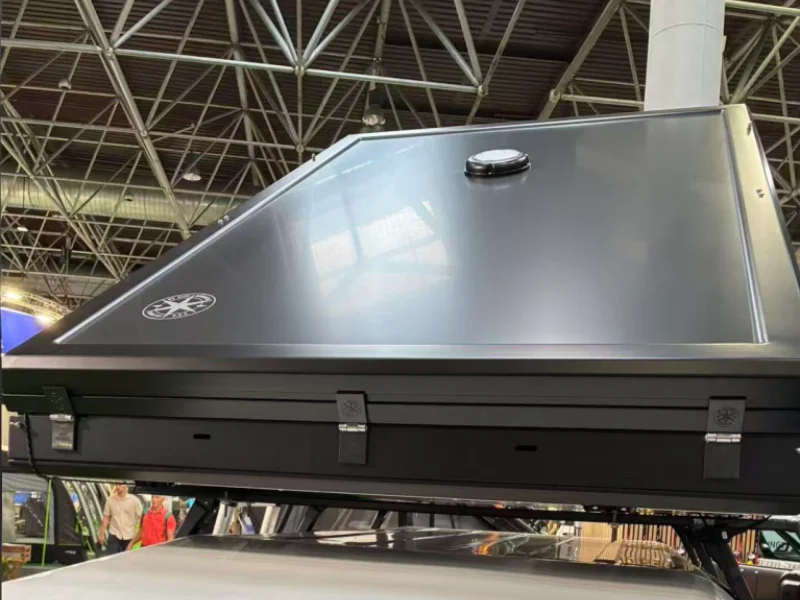
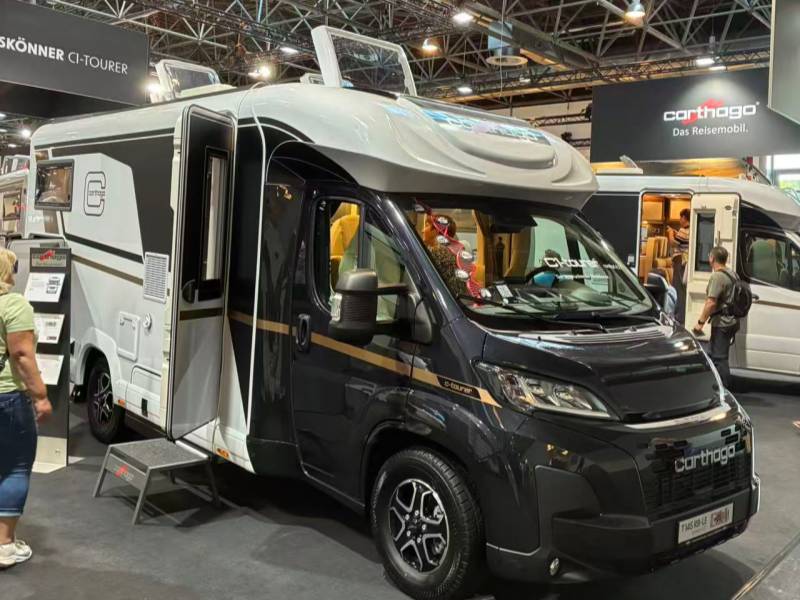
One of the clearest observations from the show was how differently manufacturers use the roof.
Depending on the vehicle, the available surface may need to accommodate:
- air conditioning
- roof vents and fans
- skylights
- antennas and communication equipment
- pop-up roofs
- roof racks
- cable entries
- maintenance access
- solar modules
This means total roof dimensions tell us relatively little about the usable solar area.
A solar project may begin with a requirement such as:
We need 400W of solar on the roof.
But that is often not the best place to start.
The better questions are:
Where are the obstacles?
Which areas need to remain accessible?
Where are the curved sections?
Where will the cables enter the vehicle?
Which roof components can create recurring shade?
And how much continuous area actually remains for solar?
A roof obstacle can occupy only a small physical footprint while its shadow moves across a much larger portion of the solar module during the day.
So usable roof area is not only a geometry question.
It can become an electrical question too.
That is why roof definition should come before simply selecting a wattage target.
What this means for RV OEMs
Instead of asking only:
How much solar can we fit on this roof?
a more useful question can be:
How much usable, low-shade roof area should we preserve for onboard energy generation?
That shift can influence both the physical and electrical design of the solar system.
Suggested onsite photo: a roof view clearly showing solar modules together with vents, skylights or air-conditioning equipment.
Suggested caption:
Motorhome roof configuration observed at CARAVAN SALON Düsseldorf 2026. Roof equipment reduces the continuous area available for solar integration.
2. More Electrical Comfort Is Increasing the Value of Solar
Modern RVs are asking electricity to do more. The broader trend includes larger battery banks, higher-power inverters, refrigeration, connectivity, entertainment, electric cooking and air conditioning.
But there is an important distinction:
A larger battery stores more energy. It does not generate more energy.
When connected to shore power, the vehicle can recharge externally.
While driving, alternator or DC-DC charging may contribute.
Some vehicle architectures may use additional charging sources.
But when an RV is parked away from external power, solar is one of the onboard systems capable of continuously harvesting new energy.
This makes the relationship between battery capacity and solar capacity increasingly important.
Battery capacity determines how much energy an RV can store. Solar capacity helps determine how much energy it can recover while parked.
More solar is not automatically the answer
A weekend camper that frequently connects to campsite power has very different requirements from a vehicle designed for extended off-grid use.
A compact campervan also has very different roof constraints from a large motorhome.
The engineering goal should therefore not be:
Install as much solar as possible.
It should be:
Define how much onboard energy generation the intended use case actually requires — before the roof layout makes that target difficult or impossible.
This distinction is important both technically and commercially. A good solar system is not the one with the highest possible wattage. It is the one whose energy contribution matches the job of the vehicle.
3. Standard Rectangular Solar Panels Do Not Always Match Real RV Roofs
Standard solar panels work well when the available installation area is regular, continuous and compatible with standard module dimensions.
RV roofs frequently are not.
Once air conditioners, skylights, vents, antennas and other components are positioned, the remaining area may become fragmented.
One vehicle may leave a long, narrow space.
Another may provide several smaller areas.
Another may have substantial curvature.
And another may appear to have enough total area, but recurring shade makes part of that area less useful electrically.
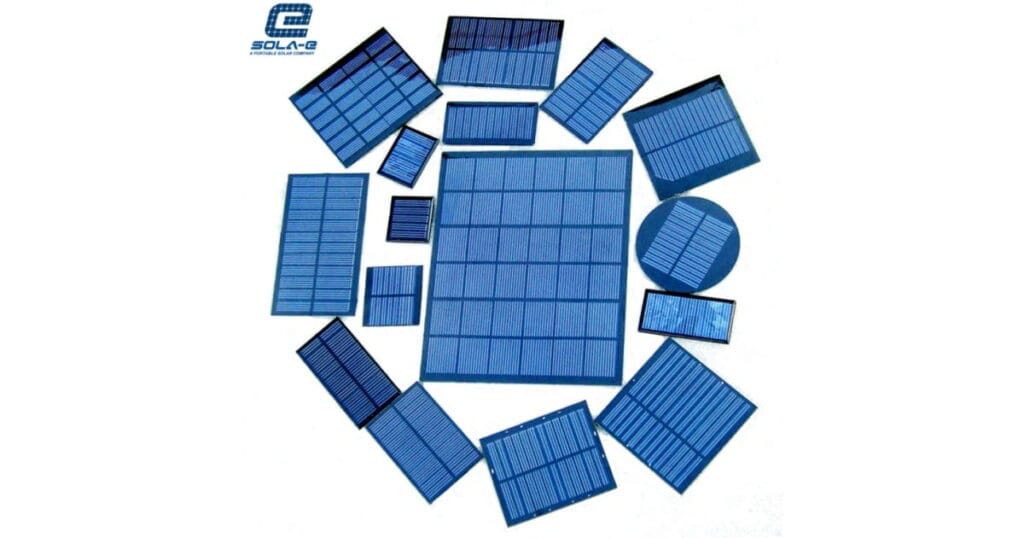
This is where custom RV solar panels can become valuable.
When Custom RV Solar Geometry Makes Sense
Depending on the project, customization may involve:
- panel length and width
- non-standard geometry
- cell arrangement
- output voltage
- series/parallel configuration
- junction-box position
- cable exit and cable length
- connector type
- mounting-hole positions
- laminate construction
- thickness
- weight target
The objective is not to customize for the sake of customization.
It is to make the solar module work with the vehicle geometry, electrical system and manufacturing requirements together.
Sometimes several smaller modules may use fragmented roof space more effectively than one large module.
Sometimes a custom-shaped panel is more suitable.
And sometimes the most rational decision is to accept a lower wattage target rather than force an unsuitable module onto the vehicle.
Standard vs Custom RV Solar Panels
| Standard RV Solar Panel | Custom RV Solar Panel |
|---|---|
| Fixed dimensions | Designed around available roof geometry |
| Standard voltage options | Electrical configuration can be tailored |
| Standard cable position | Cable and junction-box location can be customized |
| Best for regular roof space | Useful for fragmented or constrained areas |
| Lower development complexity | Better integration with OEM vehicle design |
| Limited control over cell layout | Cell arrangement can reflect available space |
| Faster for conventional applications | Better suited to platform-specific requirements |
This does not mean a custom solution is automatically better.
If a standard panel fits the roof, electrical architecture and installation requirements well, it may remain the simpler and more economical choice.
Custom development becomes more valuable when the vehicle itself creates constraints that standard products cannot solve efficiently.
4. Partial Shading Can Change the Electrical Design
A narrow shadow from a roof vent may cover only a small percentage of a solar panel.
It is therefore easy to assume:
10% shade = approximately 10% power loss.
That assumption can be wrong.
10% shaded area does not necessarily mean 10% power loss.
In a series-connected string, the same current passes through each cell.
If one cell becomes heavily shaded and cannot generate the same current as the others, it can restrict current through a much larger part of the electrical string.
This means a narrow shadow from a vent, antenna, cable or other roof feature can sometimes have an electrical effect much larger than its physical footprint.
For RV applications, this matters because shading is not necessarily an occasional abnormal condition.
The vehicle changes orientation.
Roof obstacles remain close to the module.
Trees and campsite surroundings can introduce additional shade.
The shadow pattern can change throughout the day.
Why Bypass Architecture Matters
Bypass paths can allow current to move around a heavily shaded electrical section.
But there is a trade-off.
Greater electrical segmentation can help localize shading losses.
At the same time, additional segmentation can mean:
- more bypass components
- more interconnections
- more soldering points
- more assembly operations
- tighter manufacturing control
- more potential long-term reliability points
That trade-off is already reflected in the original shading analysis.
So the engineering objective is rarely:
Maximize the number of bypass sections.
A more useful objective is:
Balance shade tolerance, electrical performance, manufacturability, durability and long-term reliability.
For RV solar development, three things should therefore be reviewed together:
Roof obstacles → likely shade paths → electrical cell grouping
The roof geometry tells us where the shadow is likely to fall.
The electrical architecture determines how far the effect can spread.
5. Higher Cell Efficiency Matters Most When Roof Area Is Limited
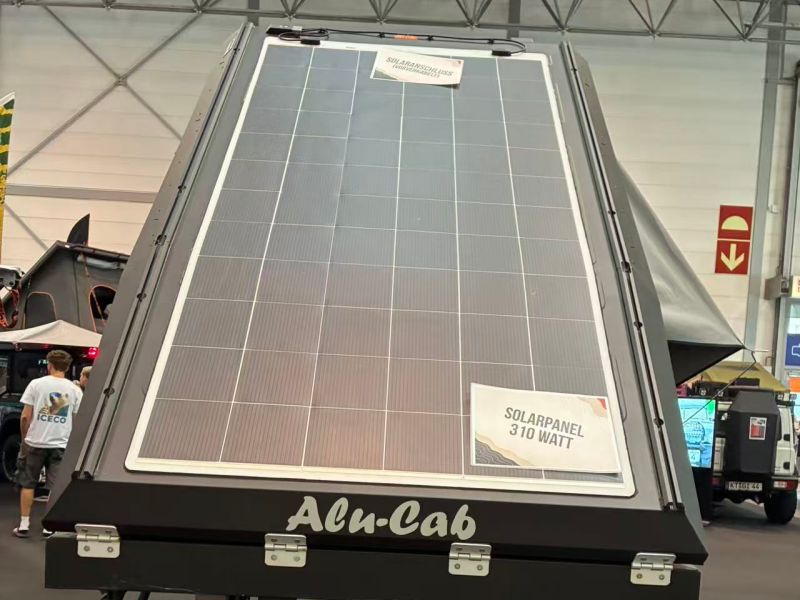
Higher-efficiency cells can be particularly valuable in RV applications because usable roof space is constrained.
They may allow:
- more output within the same footprint, or
- similar output while leaving more clearance around other roof equipment.
But another distinction is important:
Cell efficiency is not the same as finished-panel output.
Cell cutting, spacing, interconnection, encapsulation, inactive edge area and electrical layout all influence what the finished module actually delivers.
So when evaluating an RV solar panel, the useful question is not simply:
What is the solar-cell efficiency?
It is:
How much verified finished-panel output can we achieve inside this specific usable roof area?
That is the number that ultimately matters to the vehicle.
6. Lightweight Solar Is a System-Level Question
Weight is another recurring constraint for motorhomes and campervans.
Lightweight and flexible solar structures can reduce roof mass compared with heavier conventional module constructions.
But panel weight alone does not describe the complete installed system.
The vehicle may also carry:
- adhesive
- brackets or mounting hardware
- cables
- connectors
- junction boxes
- supporting structures
- reinforcement
So the useful question is not only:
How light is the panel?
It is:
How much weight does the complete installed solar solution add to the vehicle?
Reducing panel weight can also change stiffness, cell support and overall mechanical behavior.
The target should therefore be:
The lightest structure that still satisfies the vehicle’s mechanical and durability requirements.
Not simply the lowest possible panel weight.
7. Flexible Solar Does Not Mean Unlimited Bending
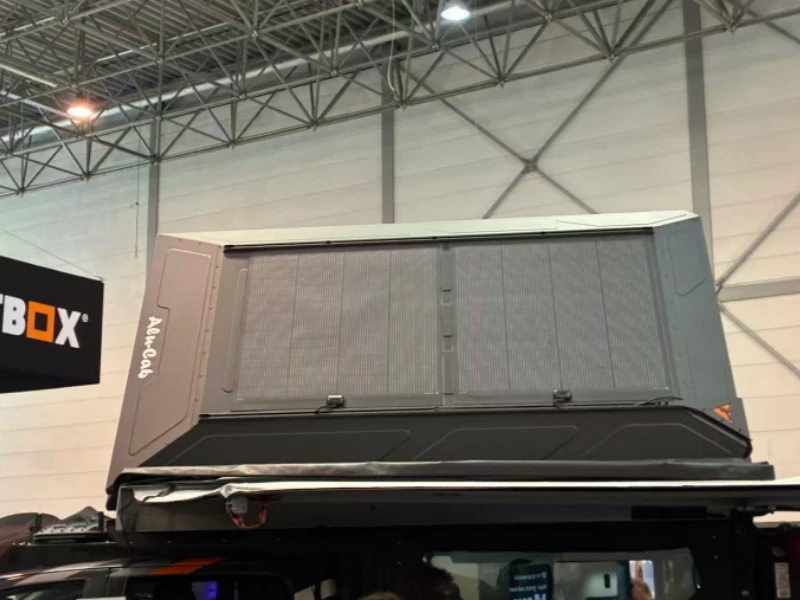
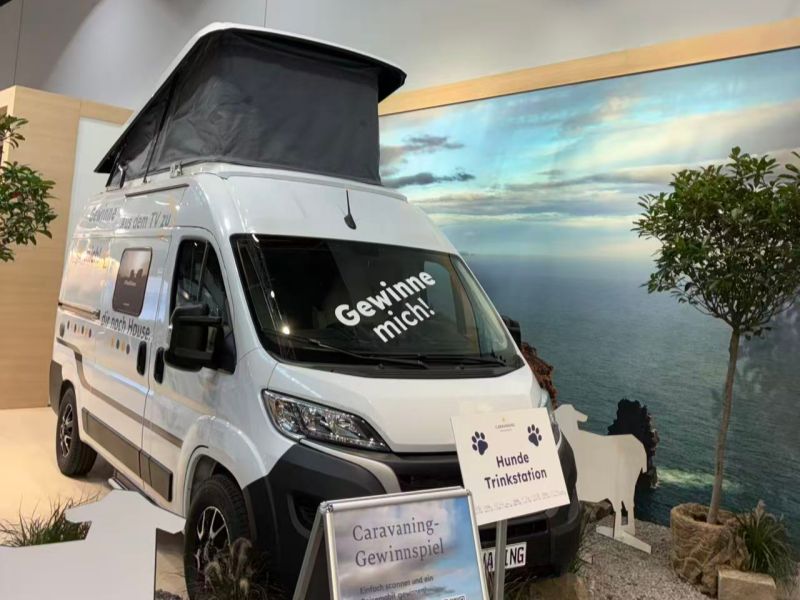
Flexible solar panels can be attractive for curved RV roofs because they can follow surfaces that conventional rigid panels cannot.
But the word flexible needs to be treated carefully.
It does not mean:
bend the panel to any radius.
A gentle, uniform roof curvature is different from a tight local bend.
Temporary flexing during handling is also different from keeping the complete module under continuous curvature for years.
Cells, interconnections, encapsulation and bonded interfaces experience that mechanical condition together.
The useful question is therefore not only:
Can the panel bend?
It is:
Can the complete module remain mechanically and electrically stable under the curvature this vehicle will impose over time?
For an OEM project involving a curved roof, roof drawings, dimensions or 3D geometry should ideally be reviewed before the solar-panel structure is finalized.
Suggested onsite photo: a campervan or motorhome showing an unusual or curved roof geometry.
8. Installation Method Should Be Defined Before the Panel
Installation is sometimes treated as something that happens after solar-panel design.
For an RV application, that can be too late.
For example, directly bonding a lightweight solar panel to the roof can produce a clean, low-profile installation.
But the mounting method can also influence:
- thermal behavior
- mechanical stress
- vibration
- adhesion
- inspection
- service access
- removal
- replacement
Cable exits and junction boxes also sit at the intersection of electrical connection, sealing and repeated vehicle movement.
Their position and strain relief should therefore be considered as part of the vehicle environment.
A useful design question is:
Will the installation method still make sense several years after the vehicle leaves the factory?
A panel that is easy to install on Day 1 may be difficult to inspect, remove or replace later.
Installation is therefore not simply something that happens to the panel.
It is part of the product definition.
9. RV Solar Validation Should Reflect the Vehicle Environment
An RV is not a stationary rooftop.
The vehicle vibrates.
The roof can flex.
The solar module experiences transport shocks, temperature changes and repeated mechanical loading.
Some damage may appear immediately.
Other changes may develop gradually.
That means validation should not only ask:
Did the panel survive the test?
It should also ask:
What changed before and after the test?
Depending on the project, that may include reviewing:
- electrical output
- IV characteristics
- visual condition
- adhesion
- junction-box condition
- insulation
- waterproofing
- mechanical integrity
A solar panel can look physically intact after mechanical testing while its electrical behavior has changed.
That is why the original RV solar integration framework emphasizes comparing the module before and after testing, rather than relying only on visual survival.
Vehicle-, market- and OEM-specific requirements should also be defined before the final product is frozen.
10. What RV Manufacturers Should Define Before Requesting a Custom Solar Panel
Many solar RFQs begin with only three pieces of information:
dimensions + voltage + wattage
For custom RV solar development, this is usually not enough.
Providing the following information earlier can significantly improve the engineering evaluation.
| Information to Define | Why It Matters |
|---|---|
| Available roof area | Determines realistic module dimensions |
| Roof drawing/layout | Shows how the panel interacts with other equipment |
| Roof obstacles | Identifies restricted and shaded zones |
| Roof curvature | Influences panel structure |
| Target solar power | Determines required active cell area |
| System voltage | Influences electrical configuration |
| Expected shading | Helps define cell grouping and bypass strategy |
| Weight target | Influences laminate construction |
| Mounting method | Affects mechanical and thermal behavior |
| Junction-box position | Influences integration and serviceability |
| Cable requirements | Determines cable routing and connection design |
| Connector requirement | Ensures compatibility with vehicle architecture |
| Operating environment | Helps define validation requirements |
| Estimated annual volume | Influences manufacturing strategy |
For a new vehicle platform, the ideal time to involve the solar engineering team is before roof geometry and equipment positions are completely frozen.
At that stage, design options still exist.
After the roof has been finalized, solar development often becomes an exercise in working around decisions that have already been made.
11. Do You Actually Need a Custom RV Solar Panel?
Not every RV project needs custom development.
A standard solar module may still be the simpler and more economical solution when:
- the usable roof area is regular
- standard dimensions fit efficiently
- system voltage is conventional
- roof curvature is not an issue
- cable positions are flexible
- weight requirements are not unusually restrictive
- recurring shading is limited
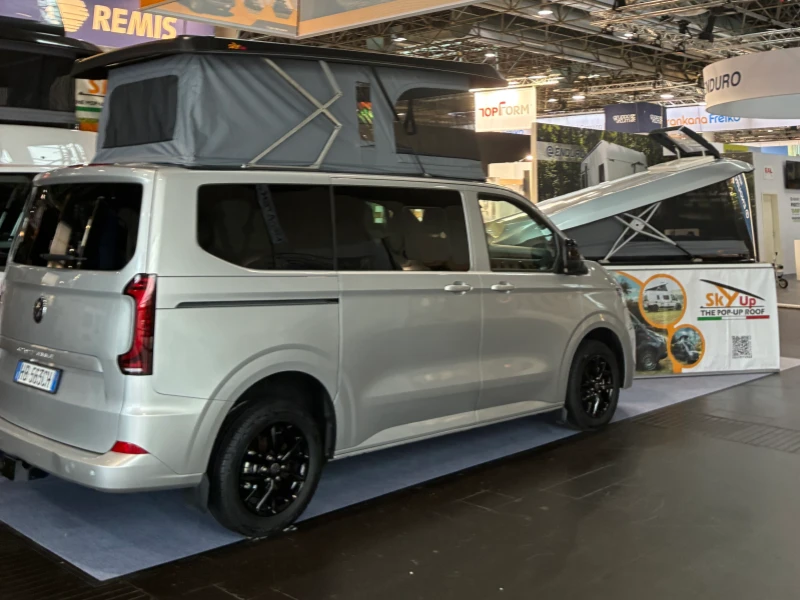
A custom RV solar panel is worth evaluating when:
- available roof space is irregular or fragmented
- standard panel dimensions waste significant usable area
- the roof has meaningful curvature
- vehicle weight is critical
- output voltage needs to match a specific system architecture
- junction-box or cable locations are constrained
- mounting-hole positions are vehicle-specific
- shading patterns make conventional cell layouts less suitable
- multiple smaller modules could use the roof more efficiently
- solar needs to be integrated into a new OEM vehicle platform
This distinction matters.
Customization should solve a real integration problem.
It should not be treated as a selling point by itself.
12. The Bigger Trend We Took Away From CARAVAN SALON Düsseldorf 2026
After looking at the different vehicles and roof configurations at the show, our biggest takeaway was not that every RV needs more solar.
Different vehicles have different jobs.
A compact campervan does not have the same energy requirements as a large motorhome.
A campsite-focused vehicle does not need the same energy autonomy as an off-grid platform.
There is no single “best” RV solar configuration for every application.
The more important trend is this:
Solar needs to enter the vehicle-design conversation earlier.
As more of the RV experience depends on electricity, usable roof area becomes increasingly valuable.
And once air conditioners, vents, skylights, antennas, pop-up roofs and cable exits have been positioned, many solar decisions have effectively already been made — even if the solar engineering team has not yet been involved.
For a long time, the development sequence could look like this:
Design the vehicle → position roof equipment → fit solar into the remaining space
For future platforms where energy independence is a stronger product requirement, the sequence may increasingly need to become:
Define the energy requirement → preserve usable roof area → integrate roof equipment and solar together
That changes the central question. Instead of:
How much solar can we fit onto this finished roof?
The better question may become:
How much onboard energy generation should this vehicle support, and what roof architecture will make that possible?
This reflects the broader engineering conclusion of the RV solar integration analysis: batteries can become larger, inverters can become more powerful and electrical loads can multiply, but the available vehicle roof cannot.
The roof is therefore not simply somewhere to mount a solar panel.
It is becoming part of the vehicle’s energy architecture.
Frequently Asked Questions About RV Solar Panel Design
Q1: What is the best type of solar panel for an RV roof?
There is no single best solar-panel type for every RV. The appropriate solution depends on usable roof area, roof curvature, vehicle weight, mounting method, shading conditions, system voltage, required output and durability requirements. A standard module may work well for a simple roof, while a custom lightweight or flexible panel may be more suitable for a constrained OEM platform.
Q2: How much solar can fit on an RV roof?
Solar capacity depends on usable roof area, not simply total roof dimensions. Air conditioners, roof vents, skylights, antennas, service zones, roof edges, curvature and recurring shade can significantly reduce the area available for effective solar generation.
Q3: Are flexible solar panels suitable for curved RV roofs?
They can be, provided the roof curvature remains within the mechanical capability of the complete module. “Flexible” does not mean unlimited bending. The panel structure, cell arrangement, encapsulation, roof radius and installation method should be evaluated together.
Q4: Does partial shading significantly reduce RV solar output?
It can. Power loss is not necessarily proportional to the percentage of panel area that is shaded. The actual result depends on which cells are affected, how the cells are connected and how the bypass architecture is configured.
Q5: When does an RV manufacturer need a custom solar panel?
Custom development is most useful when standard modules cannot efficiently satisfy the available roof geometry, voltage requirement, weight target, curvature, cable-routing, mounting or shading constraints. If a standard module already fits the application well, custom development may not be necessary.
Q6: What information is needed to design a custom RV solar panel?
The most useful starting information includes:
usable roof dimensions or drawings, roof curvature, target wattage, system voltage, mounting method, junction-box position, cable and connector requirements, expected shading, weight target and estimated annual volume.
Providing this information allows the solar manufacturer to evaluate the panel as part of the complete vehicle rather than simply quoting according to length, width and wattage.
Developing a Custom Solar Panel for an RV or Campervan?
For OEM and ODM projects, the best time to evaluate solar is before the panel dimensions and roof layout are completely frozen.
If you are developing a new motorhome, campervan, or mobile-energy platform, send us your:
- Roof drawing or available installation area
- Target wattage
- System voltage
- Weight requirement
- Mounting method
- Cable and connector requirements
- Expected annual volume
Our engineering team can evaluate the available cell area, panel geometry, electrical configuration, and manufacturing feasibility before the final specification is confirmed.

Sam | Solar Application Specialist
With over 10 years of experience in the photovoltaic manufacturing industry, Sam specializes in risk control and application engineering for portable battery chargers and marine solar panel solutions. He helps OEMs and distributors bridge the gap between technical specs and real-world performance.