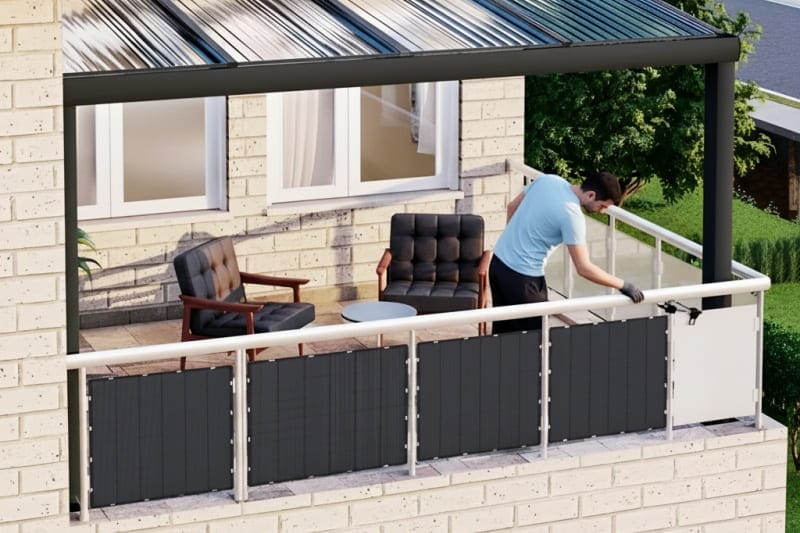
Executive Decision: The choice between flexible and rigid technology is no longer about “better” or “worse”—it is about Structural Load and Asset Protection. For 2026 OEM and fleet projects, the shift is decisively toward high-durability ETFE flexible panels to avoid the high hidden costs of traditional rigid mounting.
Table of Contents
1. Rigid Solar Panels: The Static Powerhouse
Rigid panels remain the standard for fixed, heavy-duty assets where weight and aerodynamics are secondary to raw thermal dissipation, which remains the industry baseline, as defined by leading research institutions like the International Energy Agency (IEA).
- Pros: Best-in-class heat management (due to the frame’s air gap).
- Cons: Heavy (~12kg/m²), fragile glass, and requires invasive roof penetration.
- B2B Reality: If your structure can support the load and doesn’t move, rigid is your lowest $/W choice.
2. Flexible Solar Panels: The Mobile Game Changer
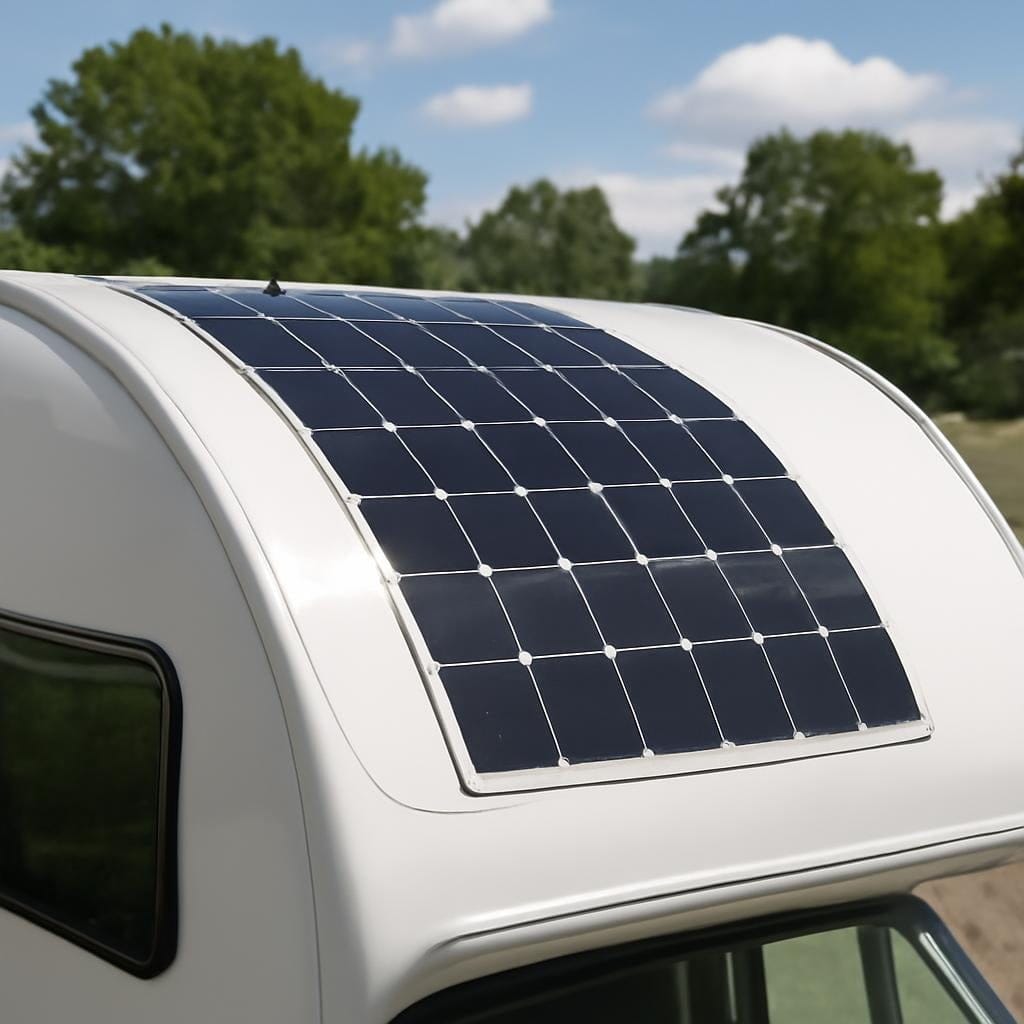
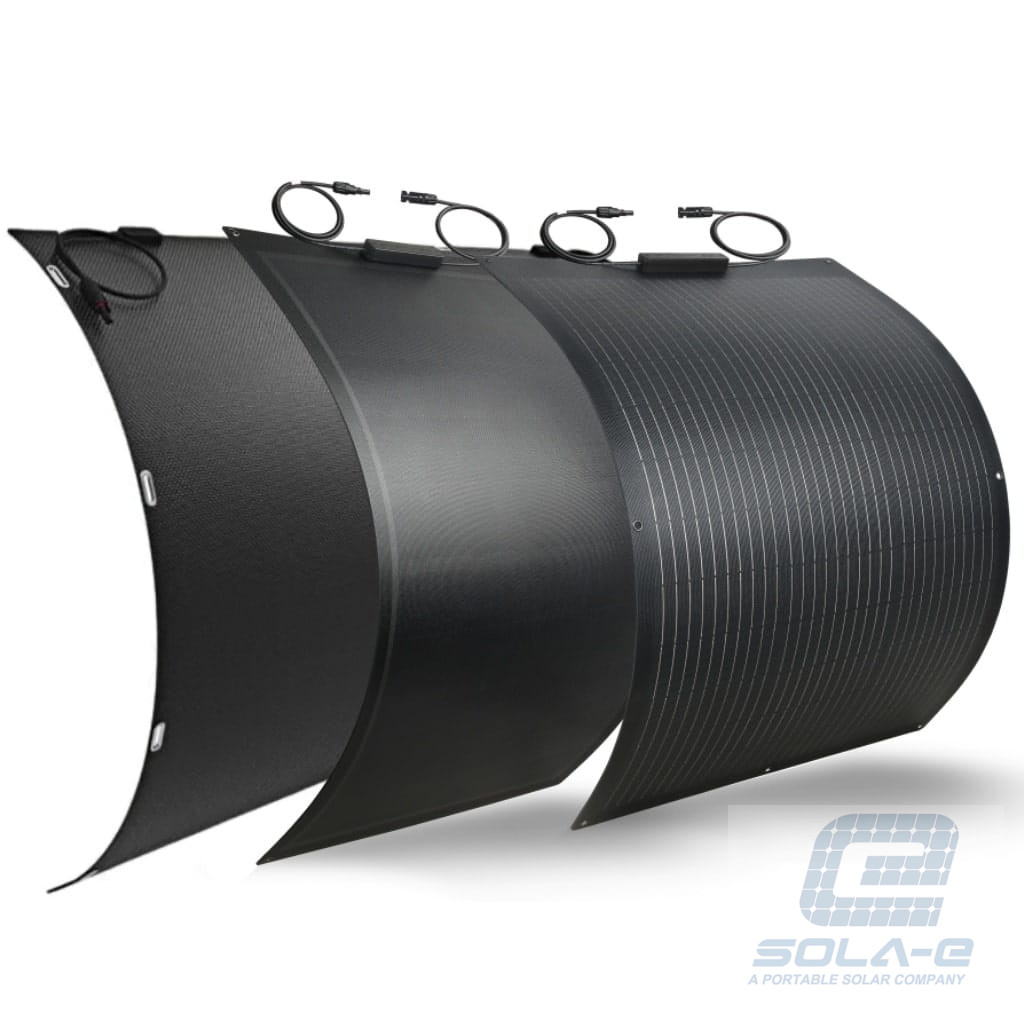
Using advanced ETFE honeycomb lamination, modern flexible panels have solved the durability issues of early “plastic” versions.
- Pros: Ultra-lightweight (~2.2kg/m²), aerodynamic (flush mount), and 100% non-invasive installation.
- Cons: Higher sensitivity to heat if zero-gap mounted on non-conductive surfaces.
- B2B Reality: Essential for vehicle fleets, curved surfaces, and weight-restricted commercial roofs.
3. The Hidden Cost of a Wrong Choice
In B2B sourcing, the price per watt is only 30% of the total cost. Choosing the wrong technology creates massive hidden liabilities:
- Rigid panels on mobile assets: Leads to structural reinforcement costs (+$2,000–$5,000 per unit) and increased fuel consumption due to wind drag.
- Low-quality flexible panels (PET): High 30% failure rate within 18 months, leading to expensive field replacement labor.
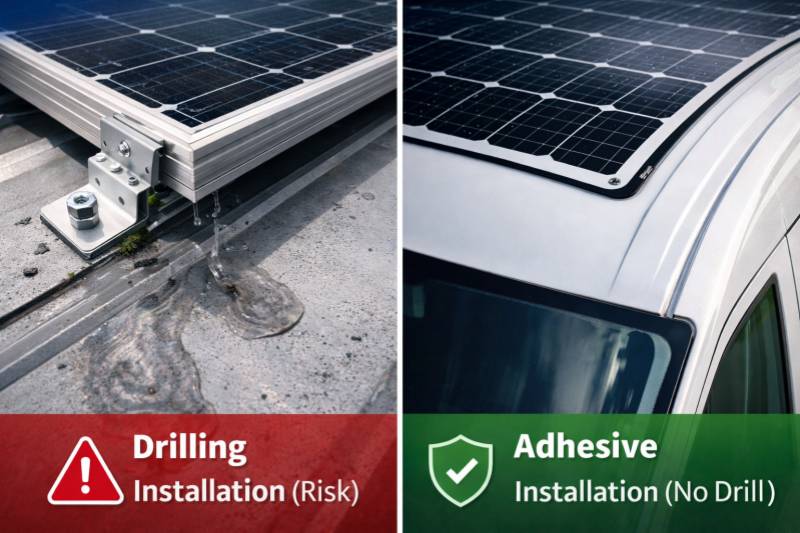
- Roof Penetration Risks: Drilling for rigid frames can void vehicle warranties and lead to long-term leakage risks.
The Professional Verdict: In mobile or sensitive-roof projects, the TCO (Total Cost of Ownership) of high-end flexible panels is often 15-20% lower than “cheap” rigid setups once labor and maintenance are factored in.
4. Decision Logic: Which One Should You Choose?
| Choose Rigid Panels If… | Choose Flexible Panels If… |
| ✔ Fixed installation (Ground/Static Roof) | ✔ Mobile or vehicle-based systems |
| ✔ High structural load capacity | ✔ Weight-sensitive or curved surfaces |
| ✔ Maximum heat dissipation is required | ✔ Non-invasive installation is mandatory |
| ✔ Lowest initial CapEx is the priority | ✔ Aerodynamics & Logistics are critical |
Professional Benchmark:
System Efficiency = (Actual Output × Installation Factor) / Total System Weight
Frequently Asked Questions (Flexible vs Rigid Solar Panels)
1. Are flexible solar panels as efficient as rigid panels?
Flexible panels today (especially ETFE laminated models) can reach 90–95% of the efficiency of rigid panels under ideal conditions.
However, in real-world B2B applications, the performance gap is often offset by:
Better aerodynamics (less dust accumulation)
Lower heat buildup in ventilated designs
Higher deployment flexibility
👉 Engineering Insight:
In mobile or curved installations, flexible panels often deliver higher effective output despite slightly lower lab efficiency.
2. What is the lifespan of flexible vs rigid solar panels?
Rigid panels: 20–25 years (static installations)
High-quality flexible panels (ETFE): 8–15 years depending on environment
👉 The key difference is not just lifespan, but application suitability:
Rigid = long-term fixed assets
Flexible = mobile / dynamic systems
👉 B2B takeaway:
Choosing the wrong type often reduces lifespan more than the technology itself.
3. Do flexible solar panels overheat more easily?
Yes—if poorly designed.
Low-end flexible panels (especially PET-based) suffer from heat buildup due to:
Poor lamination
No ventilation
Dark backing materials
👉 Modern ETFE solution:
Honeycomb surface improves airflow
Advanced lamination reduces thermal stress
👉 Result: up to 10–15% better thermal stability compared to basic flexible panels.
4. Are flexible solar panels suitable for commercial vehicle fleets?
Yes—and in many cases, they are the only viable solution.
Rigid panels on vehicles can cause:
Excessive weight load
Wind resistance (fuel penalty)
Roof penetration risks
👉 Flexible panels provide:
Flush-mounted aerodynamics
Lightweight integration
Non-invasive installation (adhesive or magnetic)
👉 This is why most 2026 fleet OEM projects are shifting toward flexible systems.
5. Can flexible solar panels be installed without drilling?
Yes. This is one of their biggest B2B advantages.
Common mounting methods include:
Industrial adhesive (VHB)
Magnetic mounting systems
Eyelets for temporary deployment
👉 Why it matters:
Preserves asset integrity
Avoids warranty issues
Reduces installation time by up to 50%
6. Are flexible solar panels durable enough for industrial use?
High-quality flexible panels (ETFE laminated) are designed for:
Impact resistance (no glass shattering)
Vibration tolerance (vehicles & mobile systems)
Weather resistance (UV, salt, humidity)
👉 The real risk comes from low-quality manufacturing, not the flexible technology itself.
Sam | Solar Application Specialist
With over 10 years of experience in the photovoltaic manufacturing industry, Sam specializes in risk control and application engineering for portable battery chargers and marine solar panel solutions. He helps OEMs and distributors bridge the gap between technical specs and real-world performance.
Still unsure which option fits your project?
Choosing the wrong panel type can increase your system cost by 20%+.
👉 Get your Flexible vs. Rigid Selection Report →
Decision Support Tools
Get Your Flexible vs. Rigid Selection Report (PDF)
Stop guessing which technology fits your project. Our engineers provide a data-driven selection matrix to justify your procurement to your stakeholders.
Your customized report includes:
- Load-Bearing & Weight Impact Analysis for your specific surface.
- Mounting Feasibility Study (VHB Adhesive vs. Mechanical Drilling).
- 3-Year ROI & Maintenance Comparison (TCO Analysis).
- Risk Mitigation Plan for heat dissipation and cell integrity.
*Includes a recommended panel type and 2026 price