This guide applies specifically to portable solar panels, flexible solar panels, and solar panel chargers, not traditional rigid glass modules.
- “Can I put this on my roof?” Yes.
- “Can I run my pump directly off it?” Yes.
- “Can I stick it to my car at highway speeds?” Yes.
At Sola-E, we take a different approach. We believe that bad applications destroy good brands.
When a client asks us to manufacture a solar panel charger for a specific use case, we validate the physics first. If a product is deployed in the wrong scenario, it will fail. The customer will not blame their own design; they will blame your brand.
Scenario A: Direct-Driving Sensitive Electronics Without a Battery
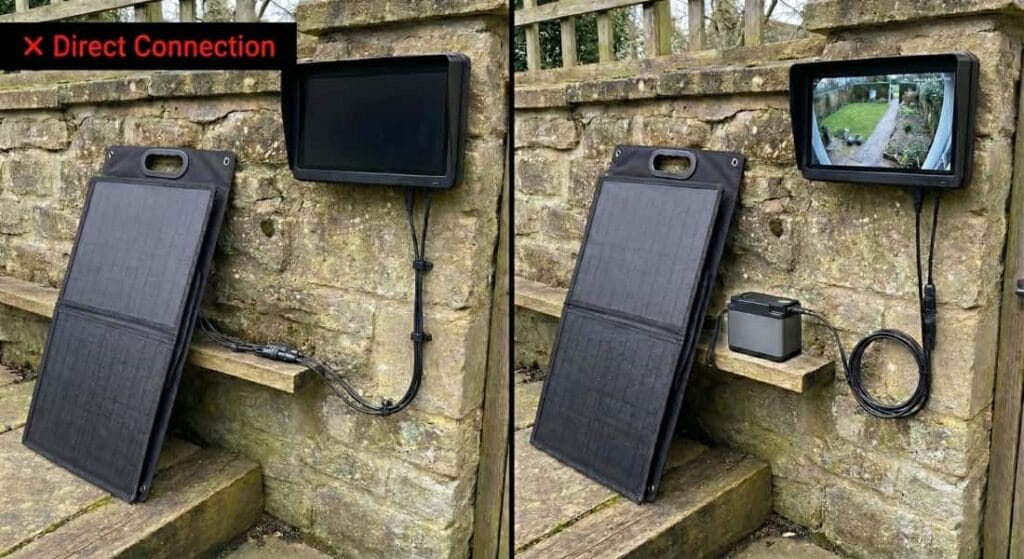
The Request: “I want to connect a security camera or router directly to the solar power charger without a battery to save money.”
Why We Say NO:
Solar energy is inherently volatile. A passing cloud can drop voltage from 18V to 5V in milliseconds.
- The Risk: “Smart” devices (Cameras, Phones, IoT sensors) need constant, stable power. Voltage drops cause them to crash, reboot, or burn out. A raw solar panel is not a wall socket; it is a variable generator.
- The Exception: Simple “dumb” loads like ventilation fans or water fountains can be direct-driven, as they simply slow down when a cloud passes. But for anything with a microchip? Never without a battery buffer.
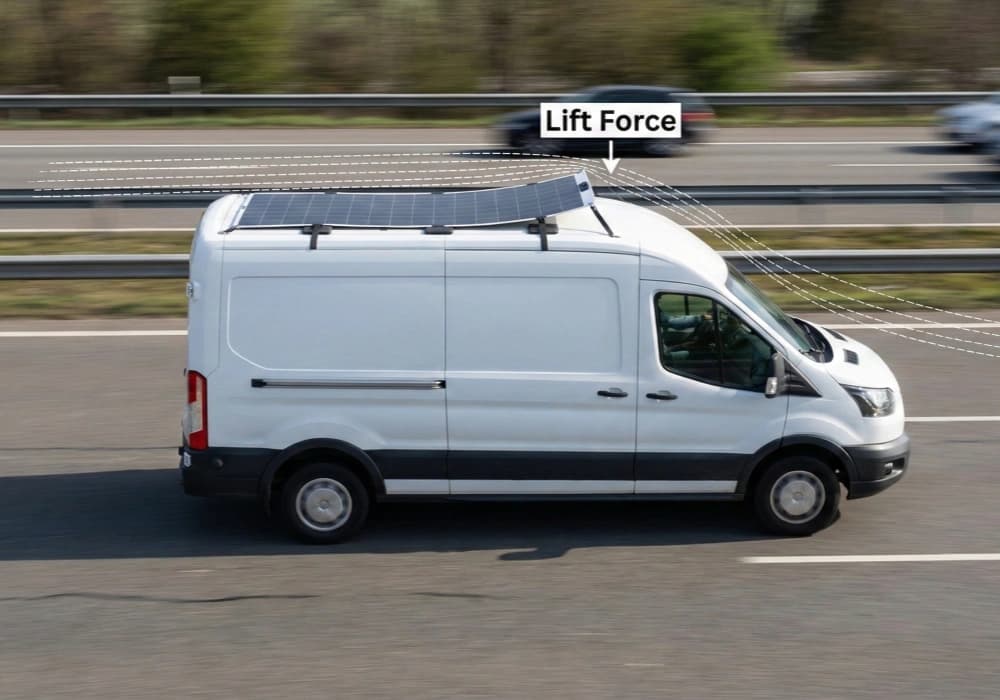
Scenario B: Temporary Flexible Solar Panels on Vehicles at Highway Speed
The Request: “I want to use magnetic mounts or velcro to stick a flexible panel to my car roof while driving on the highway.”
Why We Say NO:
Aerodynamics are brutal. At 100 km/h (62 mph), air resistance creates massive lift forces.
- The Risk: A flexible panel mounted with magnets or temporary adhesives can be ripped off the vehicle, becoming a dangerous projectile. Furthermore, the high-frequency wind flutter will shatter the internal solar cells (micro-cracks) within hours.
- The Verdict: For high-speed vehicles, panels must be permanently bonded using structural adhesives (like Sikaflex) by professionals. A standard portable solar charger (foldable type) should only be deployed when the vehicle is parked.
Scenario C: Deep Shade & Forests (The “Ambient Light” Myth)
The Request: “I need a solar charger for my camping trip in a dense forest. I don’t see the sun, but it’s bright enough to read, so it should charge.”
Why We Say NO:
Solar panels are not plants; they do not run on “ambient light.” They run on photons from direct irradiance.
- The Risk: In deep shade or under canopy cover, solar intensity drops to 1-5% of valid output. Even the best solar charger on the market cannot change physics. A 100W panel might produce only 2W—not even enough to wake up a charging circuit.
- The Verdict: If the application area does not have a clear view of the sky, solar is not the right solution.
As explained in our guide on Real-World Output, shadows are the enemy.
Scenario D: Permanent Tiled Roof Replacement
The Request: “I want to cover my entire house roof with flexible panels because they are lighter than glass.”
Why We Say NO:
This is a simple case of bad economics.
- The Risk: Traditional rigid glass panels last 25+ years and cost significantly less per watt. Flexible/Portable panels use expensive polymer materials (ETFE/PET) designed for mobility, with a typical lifespan of 5-10 years under intense UV exposure.
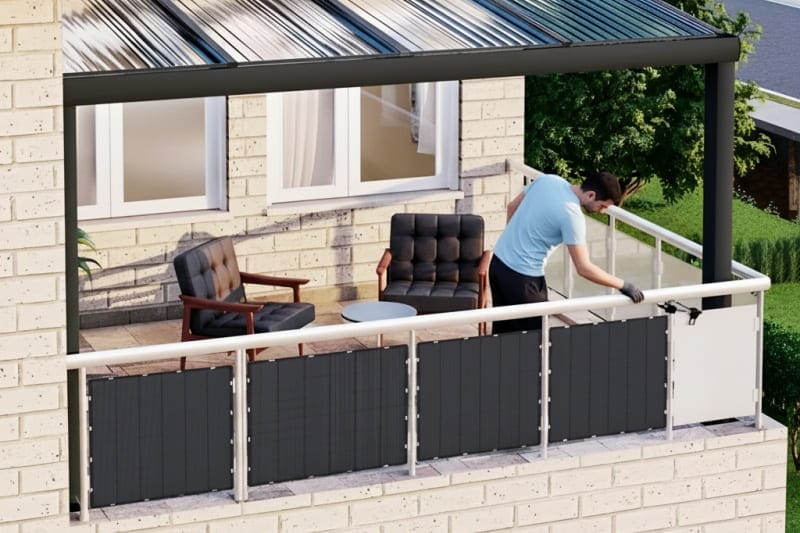
- The Exception (Balcony Solar): For apartments or balconies where heavy glass panels are banned or cannot be mounted, lightweight flexible panels are an excellent solution. But for a standard tiled roof? Stick to rigid glass modules.
The “Right Fit”: Where Our Tech Shines
So, if we exclude these scenarios, where should you use Sola-E products?
We specialize in Mobile, Marine, and Off-Grid applications where weight, thickness, and portability are the primary constraints.
- Mobile Living: RVs, Campervans, and Trucks (Parked or Bonded).
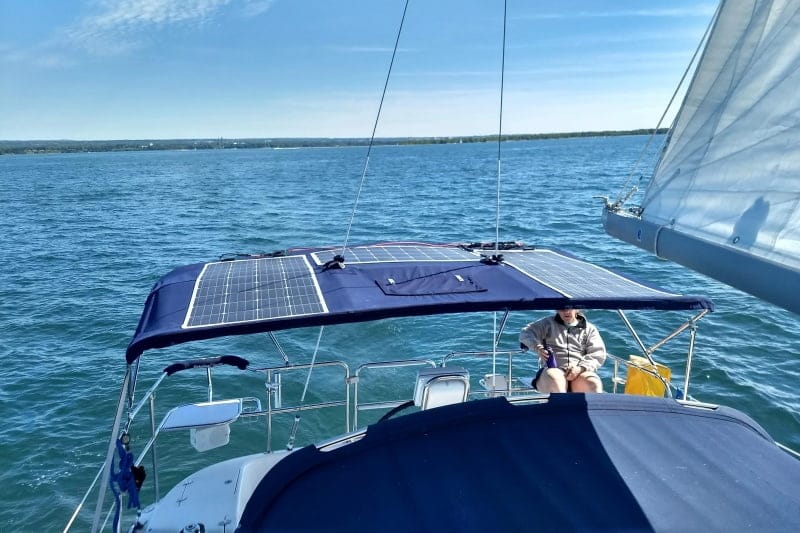
- Marine: Yachts and boats where rigid glass panels are too heavy or dangerous to walk near.
- Portable Power: Hikers, campers, and emergency backup kits where you need a reliable portable solar charger to “deploy and pack up.”
- Urban/Balcony: Lightweight solutions for apartment renters (Balkonkraftwerk).
Knowing where NOT to sell is just as important as knowing where to sell.
Need a Partner Who Tells You the Truth?
We don’t just take orders; we validate applications. If your project falls into the “Right Fit” zone, our engineering team is ready to help you optimize it.
Access our full library of risk control and partner resources here:
FAQ: Portable & Flexible Solar Panel Application Limits
Q1: Can I connect a device directly to a solar panel charger without a battery?
A: For sensitive electronics (cameras, phones, routers), No. You need a battery to stabilize voltage. However, simple DC motors (like fans or pumps) can often be run directly.
Q2: Are flexible solar panels suitable for house roofs?
A: Not for replacing standard roof tiles (too expensive and shorter lifespan than glass). However, they are perfect for balconies or weight-restricted structures where heavy glass panels cannot be installed.
Q3: Can I drive with a portable solar charger attached to my car?
A: Only if it is professionally bonded with structural adhesive. Never drive with panels attached via magnets, suction cups, or temporary mounts, as wind lift can detach them.
Q4: Will the best solar charger work in the shade?
A: Barely. Solar panels require direct sunlight to generate meaningful power. In deep shade or forests, output can drop to less than 5%, which is often insufficient to charge devices.