When sourcing solar panels for OEM projects, distribution, or commercial installations, buyers often compare shingled solar panels and PERC solar panels.
From a procurement perspective, this comparison is not about which technology is “more advanced”, but about cost, risk, delivery, and long-term reliability.
This guide is written for EU and US B2B buyers who need to make a decision quickly, based on real manufacturing and sourcing parameters.
Table of Contents
1. Executive Summary (Read This First)
Short answer:
- PERC panels are the safer choice for standardized, large-scale, and cost-sensitive projects.
- Shingled panels make sense for OEM, portable, space-limited, or design-driven products, where customization and shading tolerance matter more than lowest $/W.
If you are an EPC contractor or distributor, PERC is still the default option.
If you are a product company or brand owner, shingled panels offer differentiation.
2. What Are Shingled Solar Panels? (Procurement View)
Shingled solar panels are produced by cutting mono-crystalline cells into narrow strips and overlapping them using conductive adhesive instead of busbars.
From a buyer’s standpoint, this means:
- Higher active cell area
- Better tolerance to partial shading
- Easier customization of size, voltage, and layout
Shingled technology is commonly used in:
- Portable solar panels
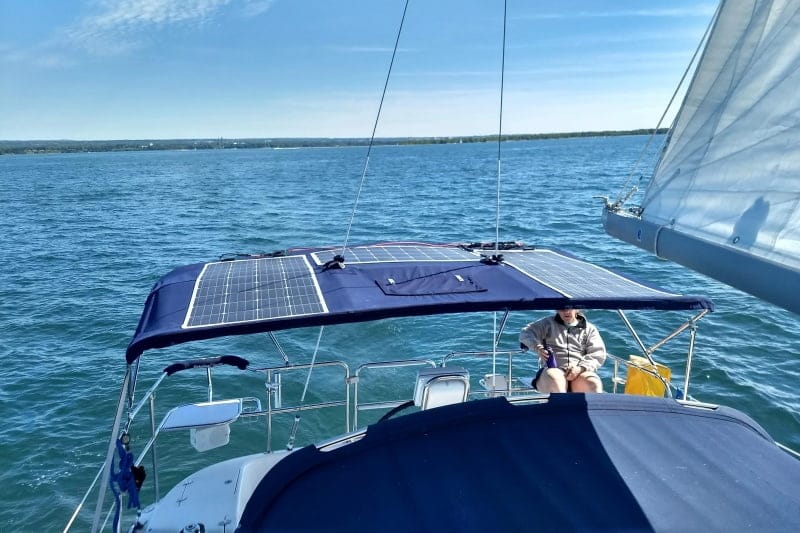
- RV & marine applications
- Lightweight or aesthetic-focused products
3. What Are PERC Solar Panels?
PERC (Passivated Emitter and Rear Cell) technology adds a rear passivation layer to standard mono cells, improving light absorption and efficiency.
Today, PERC remains the most widely deployed technology in:
- Residential rooftops
- Commercial & industrial systems
- Utility-scale projects
Its biggest advantage is maturity: predictable performance, stable supply chains, and strong market acceptance.
4. Real Procurement Parameters
Shingled panels are generally priced higher than standard PERC modules in B2B sourcing.
The premium typically ranges from 10% to 30%, depending on cell type, module design, and order volume.
Higher price gaps may occur in lightweight, flexible, or highly customized applications, rather than standard framed modules.
5. Cost vs Risk: How Procurement Managers Actually Decide
PERC: Lower Risk, Lower Cost per Watt
- Lowest $/W among mainstream technologies
- Stable long-term degradation profile
- Easier replacement and warranty handling
- Strong acceptance by EPCs, banks, and insurers
👉 Preferred for projects where risk control matters more than design flexibility.
Shingled: Higher Cost, Higher Design Value
- Higher upfront cost
- Better performance under partial shading
- Strong advantage in space-limited systems
- Easier to create differentiated products
👉 Chosen when the panel is part of a product, not just a power source.
6. Scenarios We Do NOT Recommend (Very Important)
❌ When Shingled Panels Are a Poor Choice
- Large rooftop or ground-mounted projects (100 kW+)
- EPC or government-tender projects
- Applications prioritizing lowest LCOE
Why:
Maintenance, repair, and replacement are more complex, increasing long-term operational risk.
❌ When PERC Panels Are a Poor Choice
- Portable or foldable solar products
- Systems with frequent shading
- Projects requiring non-standard dimensions or voltages
Why:
Standard PERC modules cannot fully utilize available space or handle shading efficiently.
7. About Efficiency: Avoid a Common Buyer Mistake
Many buyers compare module efficiency numbers only.
In reality:
- PERC performs best in ideal, standardized installations
- Shingled performs better in non-ideal, shaded, or compact systems
👉 Procurement decisions should be based on system output and application reality, not datasheet headlines.
8. Sustainability & Compliance (EU Buyer Perspective)
- Both technologies use similar core materials (silicon, glass, aluminum)
- PERC panels:
- Mature recycling processes
- Easier documentation for compliance and audits
- Shingled panels:
- Higher material utilization per watt
- More complex disassembly at end-of-life
👉 For large-scale EU projects, PERC remains the safer compliance choice.
👉 For product-based applications, shingled panels are acceptable when properly documented.
If you are evaluating the right technology for your project, you may also want to review our solar panel OEM services.
9. Final Recommendation
Choose PERC solar panels if you are:
- An EPC contractor or installer
- A distributor handling standardized modules
- Focused on cost control, delivery stability, and long-term reliability
Choose shingled solar panels if you are:
- An OEM or brand owner
- Developing portable, RV, marine, or compact systems
- Looking for customization and product differentiation
There is no “best” technology—only the wrong choice for the wrong application.
10. Need a Quick Sourcing Recommendation?
If you are planning to source solar panels for the EU or US market, tell us:
- Application type
- Target market
- Power, size, and voltage requirements
FAQ – Shingled vs PERC Solar Panels
Q1. Which is better, shingled or PERC solar panels?
A: Neither technology is universally “better.”
The right choice depends on the application and procurement priorities.
- PERC solar panels are better for large-scale, standardized rooftop or commercial projects where cost per watt, supply stability, and long-term reliability are critical.
- Shingled solar panels are better for compact, shaded, or customized systems where space efficiency, design flexibility, and product differentiation matter more than the lowest upfront cost.
For most EPC and distribution projects, PERC remains the safer default choice.
Q2. Are shingled solar panels more expensive than PERC panels?
A: Yes, shingled solar panels are generally more expensive than standard PERC modules. The cost premium comes from more complex cell cutting and interconnection processes, as well as lower economies of scale. However, the actual price difference varies significantly by manufacturer, product design, and order volume, and is usually justified only in applications requiring better shading tolerance, flexible form factors, or customized designs.
Q3. What is the typical MOQ for shingled and PERC solar panels?
A: Typical factory-level MOQs are:
- Shingled solar panels: around 500 pcs per specification
- PERC solar panels: around 2000 pcs per specification
Shingled technology is more suitable for OEM and customized orders, while PERC production lines are optimized for high-volume standardized output.
Q4. How do lead times compare between shingled and PERC panels?
A: Lead times are generally:
- Shingled panels:4–6 weeks
- PERC panels:6–8 weeks
Although PERC technology is more mature, large production volumes and fixed manufacturing schedules can result in longer queues. Shingled orders, being smaller and more flexible, can sometimes be delivered faster.
Q5. Which performs better in partial shading conditions?
A: Shingled solar panels perform better under partial shading.
Because shingled cells are wired in parallel strips rather than long series strings, shading affects only a small portion of the panel instead of reducing output across the entire module. This makes shingled panels more suitable for:
Urban environments with frequent shading
Irregular rooftops
Portable or off-grid systems
Q6. Are PERC solar panels more reliable over the long term?
A: Yes, in most standardized installations.
PERC panels benefit from:
- Mature manufacturing processes
- Lower annual degradation rates (≈0.5%)
- Easier maintenance and replacement
For projects requiring 25–30 years of predictable performance, PERC panels are generally considered the lower-risk option.
Q7. Are shingled solar panels harder to recycle?
A: Shingled solar panels use similar core materials (glass, aluminum, silicon) but are slightly more complex to disassemble due to conductive adhesives.
- PERC panels are easier to recycle using existing industrial processes.
- Shingled panels may require additional separation steps, which can increase recycling cost.
For large-scale EU projects with strict compliance requirements, PERC panels remain the safer recycling choice.
Q8. Which technology is better for OEM or private-label solar products?
A: Shingled solar panels are generally better for OEM and private-label applications.
They allow:
- Non-standard sizes and voltages
- Lightweight designs
- Better performance in compact systems
This flexibility makes shingled panels ideal for portable solar panels, RV systems, marine applications, and branded consumer products.
Q9. Should efficiency numbers be the main decision factor?
A: No. Efficiency values measured under standard test conditions do not reflect real-world performance in all applications. Buyers should consider:
- Installation environment
- Shading conditions
- System-level output
- Maintenance and replacement risks
In procurement decisions, total system performance and risk profile are more important than peak efficiency figures.
Q10. Which option offers a better return on investment (ROI)?
A: PERC panels usually deliver better ROI in large-scale or grid-connected projects due to lower upfront cost and predictable performance. Shingled panels can offer better ROI in niche applications where space efficiency or design differentiation increases product value.
The best ROI depends on how and where the panel is used, not just the technology itself.
Still Undecided? Let Our Engineers Help
Tell us your application type (RV, Marine, or Commercial) and target market. We will calculate the ROI and recommend the safer technology for your project—not just the expensive one.