The “Balcony Solar” (Balkonkraftwerk) market is exploding across Europe. Consumers love the idea of “Plug & Play” energy.
But for retailers and OEMs, this boom brings a terrifying new risk: Liability.
Unlike professional rooftop installations, balcony systems are installed by untrained end-users (DIYers) on structures (railings) that were never designed to hold heavy glass modules. In many EU markets, liability for installation accidents increasingly falls on the product supplier, not just the end user.
If a 25kg glass panel detaches from a 5th-floor apartment during a storm, the consequences are catastrophic.
At Sola-E, we believe that weight is a safety risk. This article analyzes the three major installation dangers in the balcony solar market and how switching to lightweight flexible technology manages these liabilities for brands.
Risk 1: Structural Overload (The “Old Railing” Problem)
The Threat:
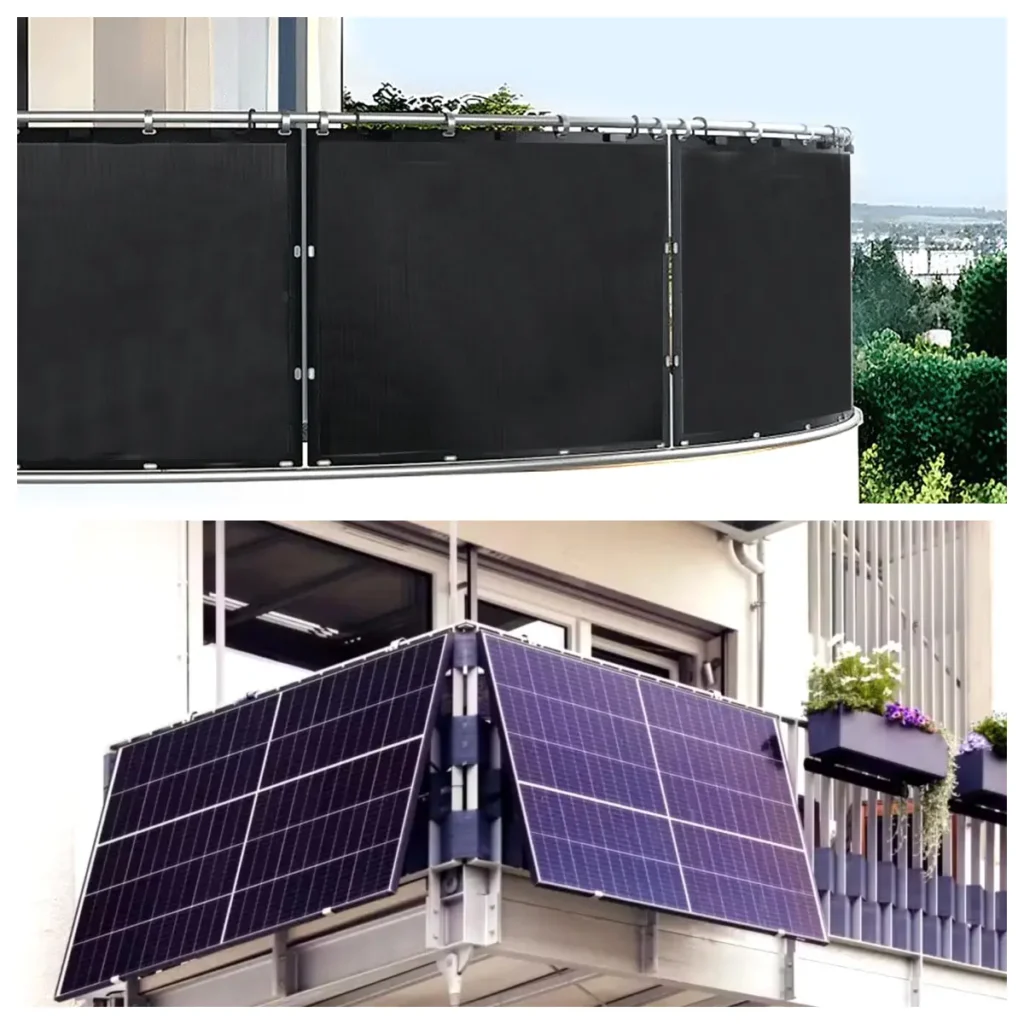
Most apartment balconies, especially in older buildings, feature decorative iron or aluminum railings. They are designed to stop a person from falling, not to support a static dead load of 40-50kg (two standard glass panels plus mounting brackets).
The Liability:
Over time, the constant weight combined with vibration can weaken the railing anchors. If the railing fails, the liability often falls on the supplier who claimed the system was “universally compatible.”
How We Manage It:
We engineer for Zero Structural Impact.
- Weight Reduction: Our flexible solar panels weigh just 2.5kg to 5kg—approx. 80% lighter than their glass counterparts.
- Load Distribution: Instead of point-loading the railing with heavy clamps, our lightweight panels distribute weight evenly, making them safe even for older or non-standard balcony structures.
Risk 2: Wind Load & The “Sail Effect”
The Threat:
A solar panel on a balcony acts as a giant sail. On a windy day, wind pressure can exert hundreds of Newtons of force.
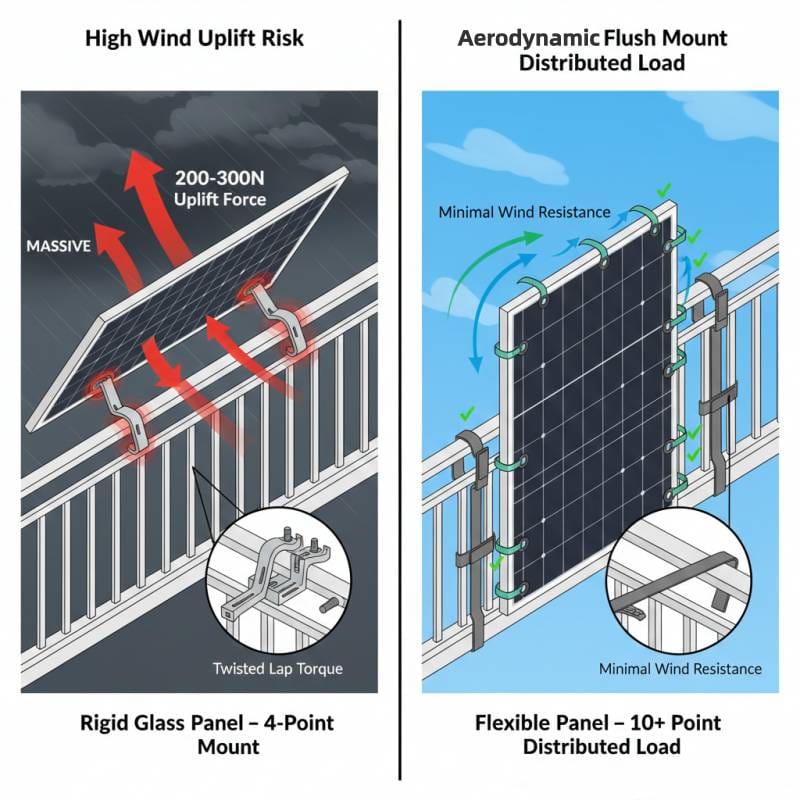
Specifically, wind uplift forces on a tilted 1.7m² panel can exceed 200–300N in storm conditions. Rigid glass panels mounted on tilted brackets catch this wind, creating massive torque forces that can rip mounting hooks straight off the metal bars.
How We Manage It:
We prioritize Aerodynamics over tilt angle.
- Flush Mounting: We recommend mounting flexible panels flush (vertically) against the railing using stainless steel ties or industrial Velcro. This eliminates the “sail effect” gap behind the panel.
- Multi-Point Fixation: Unlike glass panels that rely on just 4 clamp points, our balcony-specific designs feature reinforced metal grommets every 50cm. This distributes wind stress across 10+ points, ensuring the panel stays attached even in high winds.
Risk 3: User Error (The DIY Factor)
The Threat:
Your customer is not a certified electrician. They are a homeowner.
Complex mounting systems with bolts, nuts, torque requirements, and heavy lifting are a recipe for disaster. A slipped wrench or a loose nut can lead to a dropped panel during installation.
The Solution:
We design for Radical Simplicity.
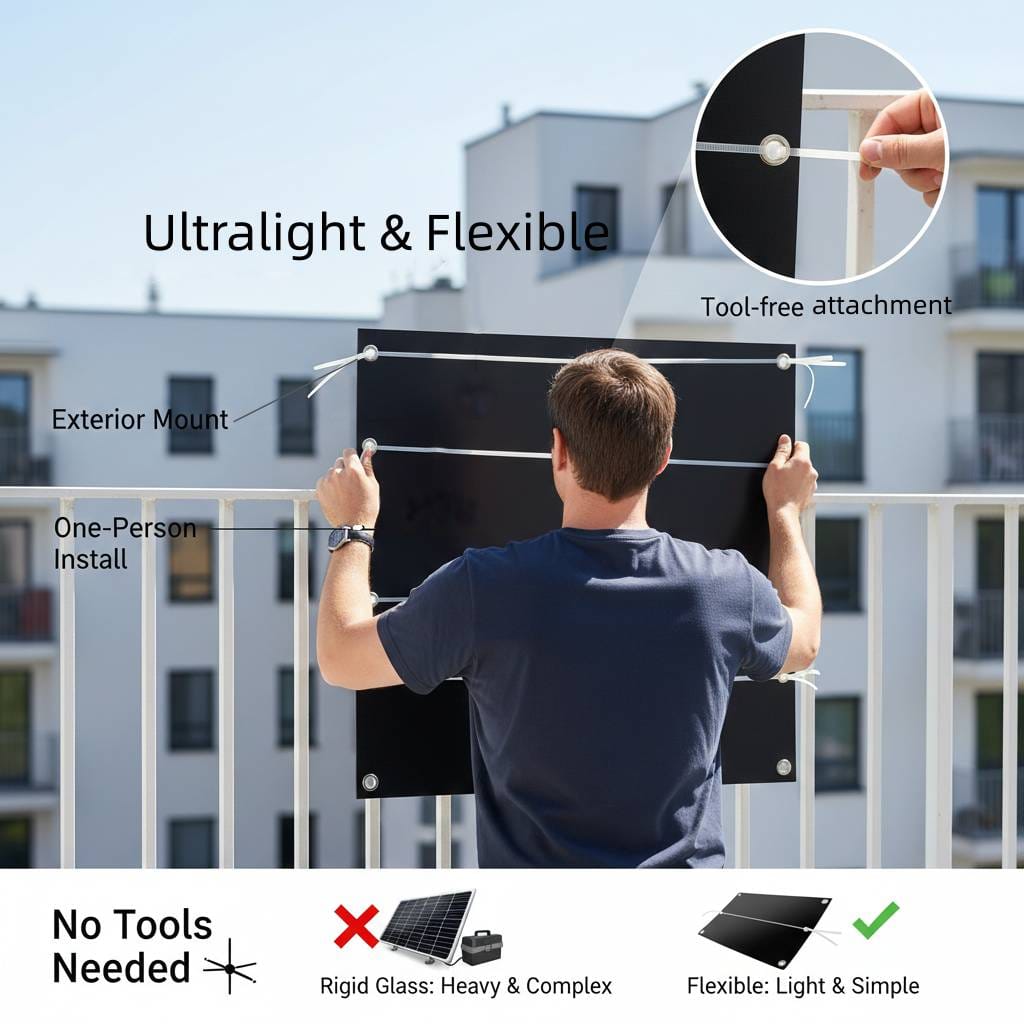
- No Heavy Lifting: A single person can easily hold our panel with one hand while strapping it with the other. No two-person team required.
- Tool-Free Installation: By utilizing heavy-duty zip ties or Velcro straps, we eliminate the need for drills and wrenches. This drastically reduces the chance of installation accidents and product returns due to “too complex to install.”
See our guide on mobile solar failure risks to understand why material durability matters just as much as installation safety.
The Commercial Reality: Safety is a Feature
For B2B distributors, “Safety” translates to Sellability.
Many landlords and Homeowner Associations (HOAs) in Europe are banning heavy glass panels due to aesthetic and safety concerns.
Sola-E’s lightweight Balcony Solar Kits bypass these restrictions. They are viewed as “temporary hangings” rather than “structural modifications,” opening up a massive market segment that rigid panels cannot touch. For many EU retailers, reducing return rates by even 5–10% can have a bigger impact on profit than lowering purchase cost.
Don’t sell a liability. Sell a solution.
Is Your Inventory Safe for DIYers?
Heavy glass panels are creating liability headaches for retailers. Switch to the Ultralight Series for a safer, compliant, and return-free customer experience.
FAQ: Balcony Solar Safety
Q1: Will flexible solar panels blow away in a storm?
Not if installed correctly. Because they are mounted flush against the railing (not tilted) and secured with multiple industrial-grade ties (10+ points), they create very little wind resistance compared to tilted glass panels.
Q2: Do I need permission to install lightweight solar panels?
In many regions (like Germany), lightweight panels mounted below a certain height (often 4m) are considered “non-permanent” installations, often bypassing the strict building approvals required for heavy glass fixtures. Always consult local building codes and liability regulations before commercial distribution. Some marketplaces and HOAs explicitly prohibit glass modules on balconies.
Q3: Does vertical mounting reduce power output?
Slightly, compared to a perfect 30° tilt. However, as explained in our real-world output guide, the safety benefits and improved low-light performance of our ETFE materials often outweigh the theoretical loss of a vertical angle.