A Korean ODM Case Study in Custom Solar Panel Manufacturing
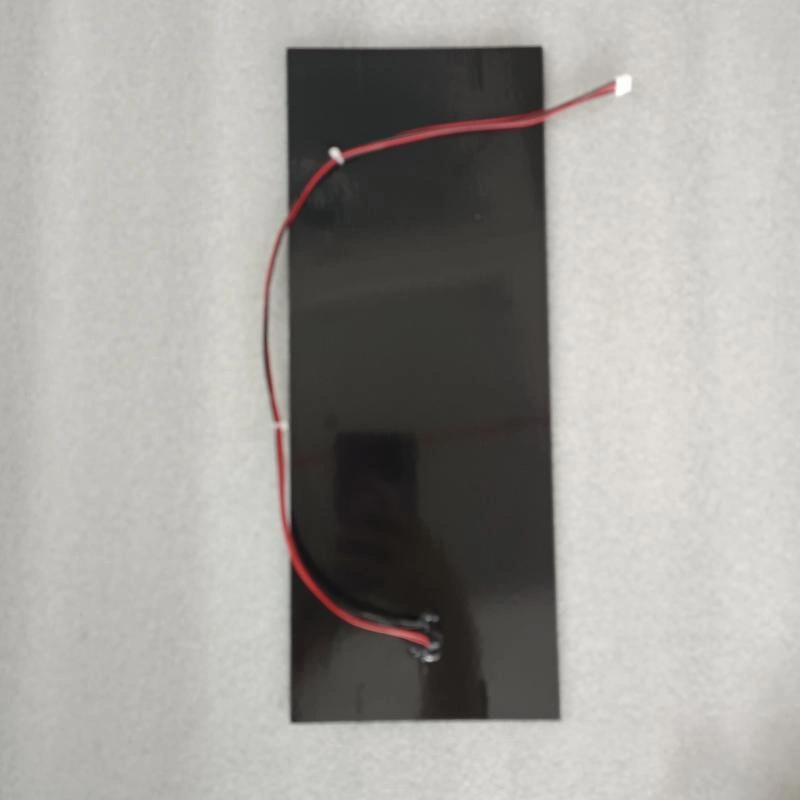
A Korean consumer electronics company approached us with an interesting challenge: developing a portable modular solar panel charging system that would allow users to expand charging capacity simply by snapping additional solar panels together.
The concept was straightforward.
Instead of connecting individual panels with cables, users could attach multiple modules through an integrated magnetic connection system. Each panel would function independently while simultaneously becoming part of a larger charging network.
The final product consisted of nine lightweight solar panel modules that could be assembled in different configurations according to the user’s power requirements.
The design looked elegant. Similar requirements are becoming increasingly common in custom solar panel manufacturing projects.
The manufacturing process was anything but simple.
Before moving into production, the customer launched the product through a Kickstarter campaign. The campaign successfully validated market demand, giving the engineering team confidence to proceed with large-scale manufacturing.
However, crowdfunding success also created pressure. Once customers began placing orders, manufacturing reliability became just as important as product innovation.
Product Design Requirements
Traditional portable solar panels usually have one or two electrical connection points.
This project required a completely different architecture.
Each panel incorporated:
- Magnetic connectors along all four edges
- Positive and negative electrical pathways integrated into the magnetic system
- Multiple solder contact points distributed around the panel perimeter
- Precision-drilled holes for magnet installation
- A dense rear PCB electrical layout
The challenge was that every magnetic connection served two functions simultaneously:
- Mechanical attachment
- Electrical transmission
If a single contact point failed, the entire modular chain could stop functioning. Unlike conventional solar panel manufacturing, this design required extremely precise control over every electrical interface.
Factory Sample: Magnetic Connector Integration
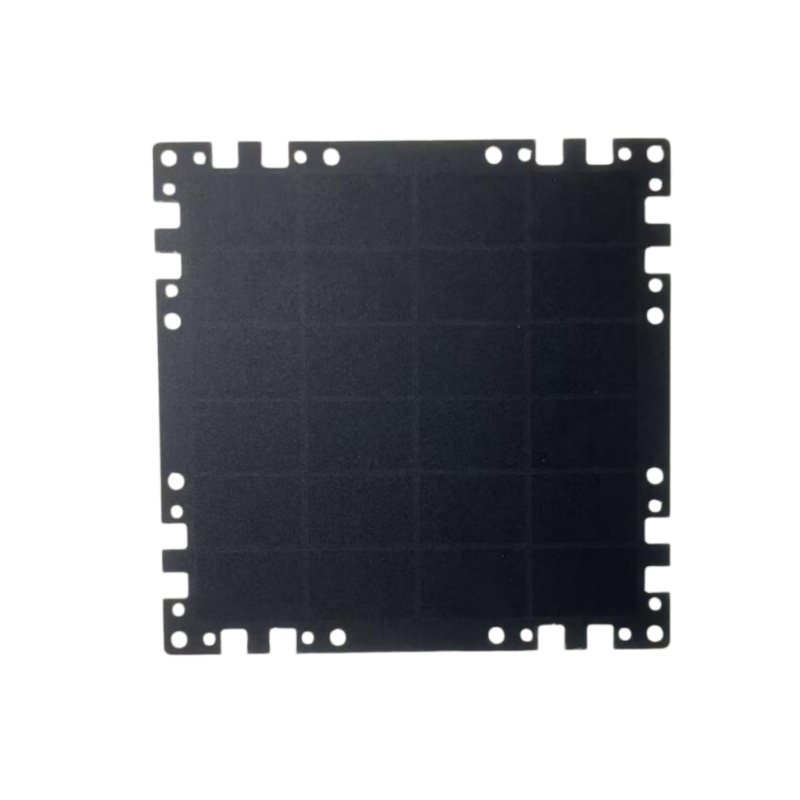
The factory sample below illustrates several key engineering features:
- Precision-drilled perimeter holes
- Integrated magnetic connection points
- Multi-point PCB contact architecture
- Full-black solar module design
The image demonstrates why this product required much tighter manufacturing tolerances than conventional portable solar panels.
Why Modular Solar Panels Are More Difficult to Manufacture
Many people assume that modular solar panels are simply smaller versions of conventional solar panels.
In reality, the manufacturing requirements are significantly different.
The complexity comes from the multi-point electrical contact system.
| Standard Solar Panel | Modular Solar Panel |
|---|---|
| One primary output connection | Multiple electrical contact points |
| Simple wiring architecture | Multi-directional electrical pathways |
| Limited mechanical interfaces | Integrated magnetic connections |
| Lower contact density | High-density PCB contact layout |
As the number of electrical contact points increases, manufacturing tolerances become much tighter.
A conductivity issue that might affect only one output terminal in a traditional panel can disrupt an entire network of interconnected modules.
The Production Problem: Intermittent Conductivity Failures
During the initial production runs, we encountered an unexpected problem.
Some panels passed electrical testing without any issues.
Later, identical panels from the same batch began failing conductivity tests.
The failures were inconsistent.
More importantly, they were almost impossible to detect through visual inspection.
At first, the symptoms suggested a soldering issue.
However, after reviewing the manufacturing process, we discovered that the problem originated much earlier.
Root Cause Analysis: Protective Coating Residue on PCB Contact Surfaces
Every PCB used in solar panel manufacturing requires surface protection to prevent copper oxidation. PCB manufacturing processes are commonly guided by IPC standards.
Without protection, oxidation can increase contact resistance and reduce electrical performance.
The original coating formulation successfully protected the copper surface.
Unfortunately, it introduced a new problem.
At lower processing temperatures, the coating was not activating completely.
As a result, a thin residue remained on the contact surfaces after cleaning.
That residue created an invisible barrier between the contact points.
Even though the panels appeared normal, conductivity could become unstable.
The problem became especially critical because the design relied on multiple contact points distributed around all four edges.
A single failed contact could interrupt the entire electrical pathway.
Why These Defects Are Difficult to Detect
This type of failure is particularly challenging because it often bypasses traditional quality inspections.
The defect does not always appear during visual inspection.
It may not even appear during initial electrical testing.
Instead, the failure develops during real-world use.
The panel leaves the factory looking perfectly acceptable.
Then, weeks or months later, users begin experiencing intermittent charging failures.
By that point, the problem has already become a customer experience issue rather than a manufacturing issue.
Field failures are significantly more expensive to correct than process failures identified during production.
The Engineering Solution
Instead of increasing inspection frequency, we focused on eliminating the root cause.
The engineering team replaced the original PCB coating with a new formulation.
The updated coating continued to provide effective copper oxidation protection.
However, it also offered a critical advantage:
It remained completely removable and fully cleanable throughout the entire processing temperature range.
By changing the coating material itself, we eliminated residue formation before it could affect conductivity.
The solution corrected the problem at the process level rather than attempting to identify defects after manufacturing.
Production Results
The program entered stable production in 2022.
From 2022 through 2025, the manufacturing schedule averaged two to three production cycles per year.
Annual order volume increased continuously throughout the program.
By the third year, production volume had approximately tripled compared with the initial manufacturing phase.
The long-term growth suggested that both the manufacturing process and the product design remained stable as demand increased.
Key Lessons for Portable Solar Product Developers
If you’re developing a portable charging product, an expandable power solution, or a modular solar panel system, this case highlights several important engineering principles.
Electrical contact design should be considered during the earliest stages of product development.
Material selection can directly influence electrical reliability.
Conductivity failures often originate in upstream processes rather than final assembly.
Inspection alone cannot compensate for an unstable manufacturing process.
Most importantly:
Precision rear-contact manufacturing is a process engineering challenge, not simply an assembly operation.
If the process is not fully validated, the consequences usually appear after shipment rather than during production.
Applications for Modular Solar Panel Technology
Modular solar panels are increasingly being used in:
- Portable power stations
- Outdoor equipment
- Emergency charging systems
- Consumer electronics
- Camping products
- Off-grid energy systems
As these products become more compact and more customizable, electrical interface design will continue to become more important. Learn more about portable power applications and custom solar solutions.
Frequently Asked Questions (FAQ)
Q1: What is a modular solar panel?
A modular solar panel is a solar module designed to operate independently while also connecting to additional panels to expand power generation. Instead of relying on a fixed panel configuration, users can increase charging capacity by adding or removing individual modules based on their specific power requirements.
Q2:How do magnetic connectors work in a modular solar panel system?
Magnetic connectors provide both mechanical attachment and electrical transmission between individual solar panels. In this design, the magnets not only hold the panels together but also transfer positive and negative electrical signals across the connection points, eliminating the need for external cables.
Q3: Why are modular solar panels more difficult to manufacture than conventional solar panels?
Traditional solar panels typically have only one primary output connection. Modular designs often require multiple electrical contact points distributed around the panel perimeter.
As the number of contact points increases, manufacturing tolerances become much tighter. A failure at a single contact point can interrupt the entire electrical pathway, making process control much more critical.
Q4: What causes conductivity failures in PCB-integrated solar panels?
Conductivity failures can result from several manufacturing factors, including copper oxidation, surface contamination, coating residue, soldering defects, and insufficient cleaning.
In this case study, the root cause was a protective coating that left residue on the PCB contact surfaces, creating an invisible barrier that interfered with electrical conductivity.
Q5: What should engineers consider when designing a magnetic connector solar panel?
Several factors should be evaluated during the design stage, including:
Electrical contact reliability
PCB layout optimization
Connector positioning
Material compatibility
Surface treatment
Environmental durability
Manufacturing tolerances
Addressing these factors early can significantly reduce production risks and improve long-term product reliability.
Q6: What information should be provided when requesting a custom solar panel quotation?
To evaluate a custom solar panel project, manufacturers typically need the following information:
- Panel dimensions
- Target voltage
- Power requirements
- Cell type
- Encapsulation material
- Connector design
- Expected annual volume
- Application environment
Providing complete design information during the early development stage helps reduce engineering revisions and accelerates production planning.
Developing a Custom Solar Panel or Portable Charging Product?
We support OEM and ODM projects involving custom-shaped solar panels, ETFE-laminated modules, PCB-integrated designs, precision-drilled structures, and multi-contact electrical interfaces.
- Custom solar panel size and shape evaluation
- PCB and electrical contact design review
- ETFE encapsulation and structure recommendations
- Precision hole and connector integration assessment
- Prototype and volume manufacturing support
Send us your drawing, target voltage, power requirement, dimensions, and expected quantity. We can review manufacturability before you move into tooling or production.
Request a Manufacturability Review
Sam | Solar Application Specialist
With over 10 years of experience in the photovoltaic manufacturing industry, Sam specializes in risk control and application engineering for portable battery chargers and marine solar panel solutions. He helps OEMs and distributors bridge the gap between technical specs and real-world performance.