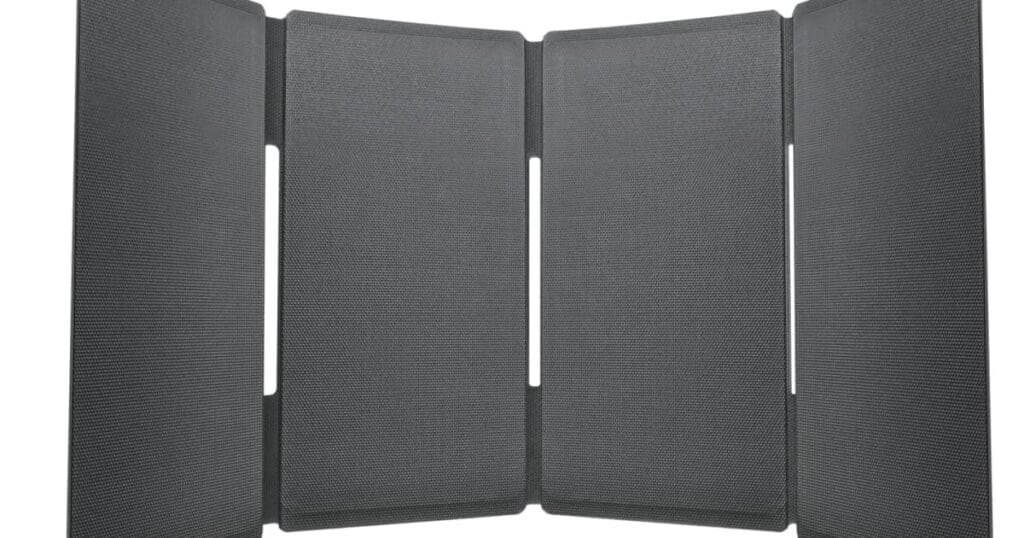
In professional operations—from UAV ground stations to emergency medical kits—every gram saved is a win for mobility. However, a lightweight foldable solar panel(UT-H series) must balance “gram-shaving” with industrial durability. Here is how modern material science is redefining the power-to-weight ratio.
Table of Contents
1. The Technology Behind the “Lightweight” Label
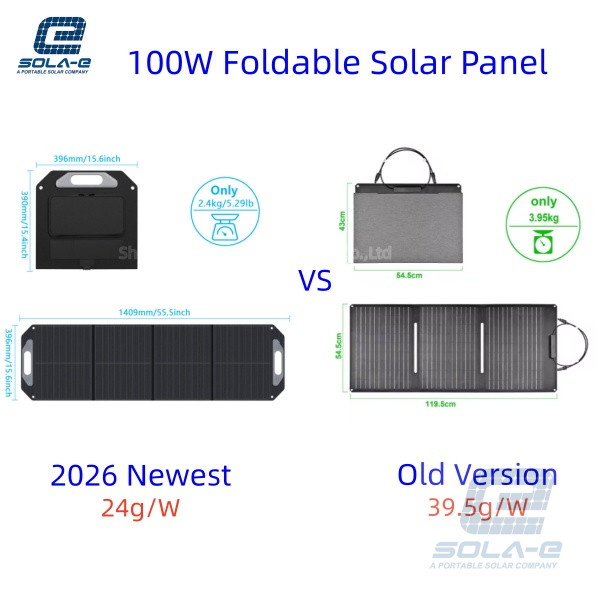
Standard portable panels rely on heavy fiberglass or glass-based backings, often resulting in a bulky 35–45 g/W ratio. We’ve re-engineered the stack from the ground up.
ETFE Honeycomb Surface
By using a textured ETFE surface, we reduce the weight of traditional glass or thick PET covers while increasing light absorption. ETFE is self-cleaning and UV-stable, ensuring your “lightweight” panel doesn’t yellow or crack after one season.
High-Strength Composite Backsheets
We replaced heavy aluminum and glass with high-impact polymer composites. This provides the structural rigidity needed to protect monocrystalline cells during folding while remaining 40% lighter than standard semi-flexible backings.
2. Gram per Watt (g/W): The Professional Benchmark
In industrial projects, weight alone is meaningless. The real metric for ROI and logistics is the Gram per Watt (g/W) ratio.
| Panel Category | Avg. Weight per 100W | Gram per Watt (g/W) | Logistics Impact |
| Standard Foldable | 3.5kg – 4.5kg | 35 – 45 g/W | High shipping & manual labor |
| Our Lightweight Series | 0.3kg – 2.5kg | 15 – 25 g/W | Max mobility & Up to 30% reduction in cost-per-watt logistics. |
✔ Decision Benchmark: For professional mobile deployments, any panel exceeding 30 g/W should be considered inefficient and a logistical liability. Optimized weight is the primary driver of field agility.
3. The “Ultra-Light Trap”: Why Most Panels Fail
In engineering, lighter is not always better. Optimized weight is. Stripping away structural integrity to save a few grams is the fastest way to field failure. Many suppliers claim “ultra-lightweight” by stripping away all structural support.
⚠️ The Hidden Risks of Fragile Lightness:
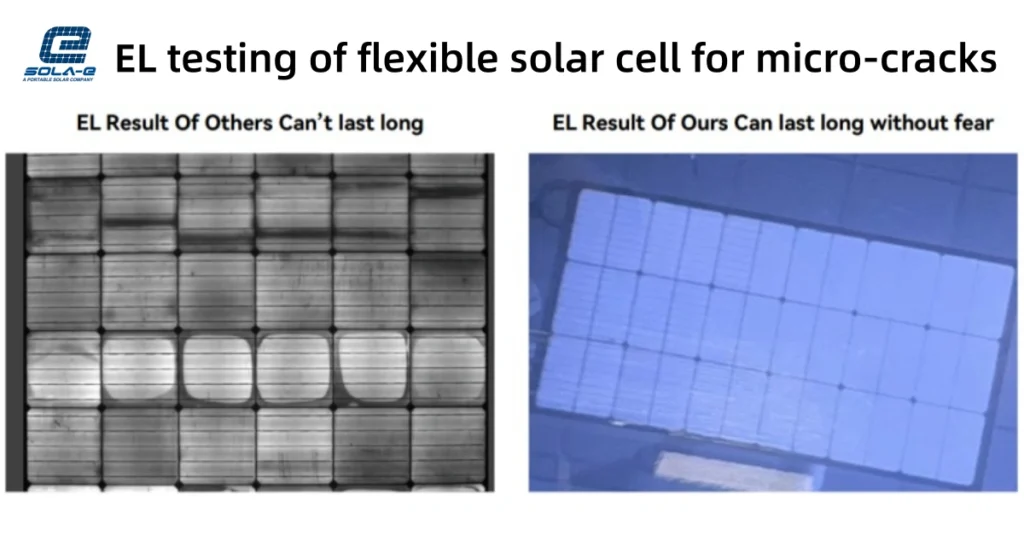
- Unsupported Cells: Without a rigid composite backsheet, cells flex too much, leading to invisible micro-cracks after just 10–20 fold cycles.
- Fabric Moisture Traps: Cheaper “stitched” lightweight panels absorb humidity, leading to internal busbar corrosion and a 30-50% power drop within months.
- Overheating: Fabric-wrapped panels trap heat. Our integrated vacuum lamination allows cells to run 10°C cooler, boosting real-world efficiency by 5%.
4. Mission-Critical Applications
- UAV & Drone Ground Stations: A 100W lightweight panel under 2kg allows for rapid hiking into remote launch sites.
- Remote IoT & Environmental Monitoring: Perfect for helicopter drops or manual carry-in for high-altitude sensor arrays.
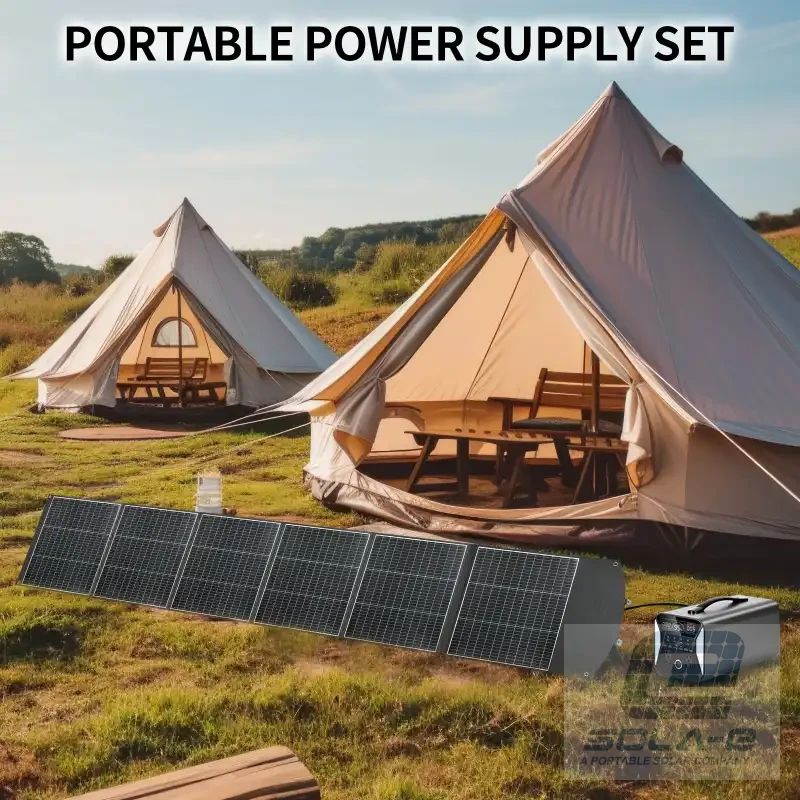
- Mobile Satcom (Starlink): High-output 200W lightweight arrays provide consistent power without adding significant weight to a technician’s pack.
Most projects don’t fail in the lab. They fail in the field—precisely because weight-to-power ratios, heat dissipation, and structural durability were underestimated during the sourcing stage. Don’t let logistics be your single point of failure.
“Most projects don’t fail in the lab. They fail in the field — precisely because weight-to-power ratios, heat dissipation, and structural durability were underestimated.”
Get Your Lightweight System Configuration (PDF)
Don’t sacrifice durability for gram-shaving. Our engineers provide a full power & weight solution, not just a quote.
Send us your device specs to receive:
- Recommended Panel Wattage & g/W Efficiency Analysis.
- Weight Optimization & Logistics ROI Plan (Up to 30% reduction).
- Battery Autonomy & Solar Recharge Calculation for your environment.
*Expert technical response guaranteed within 24 hours.
Q1: What is a good g/W ratio for professional solar panels?
For mobile industrial systems, aim for below 25 g/W. Anything higher adds unnecessary fatigue to field teams and drones.
Q2: Are lightweight solar panels less durable than standard ones?
Only if structural support is removed (e.g., cheap stitched designs). Integrated lamination maintains durability while shedding weight.
Q3: What is the best solar panel for drone ground stations?
High g/W efficiency panels (15–25 g/W) with ETFE lamination to ensure rapid deployment and long-term UV resistance.
Sam | Solar Application Specialist
With over 10 years of experience in the photovoltaic manufacturing industry, Sam specializes in risk control and application engineering for portable battery chargers and marine solar panel solutions. He helps OEMs and distributors bridge the gap between technical specs and real-world performance.